



A sign can be well designed, properly illuminated, and built to last, yet still miss its purpose if it is the wrong type for the property. When comparing monument signs vs pole signs, the better choice usually comes down to road speed, viewing distance, site layout, local regulations, and what customers need to see before they turn in.
For a restaurant on a busy commercial corridor, a pole sign may provide the early visibility needed to capture traffic. For a medical office, bank, professional campus, or multi-tenant center, a monument sign may create the more polished, permanent presence the property needs. Both can be effective. The key is matching the structure to the real conditions at your location.
Monument Signs vs Pole Signs: The Core Difference
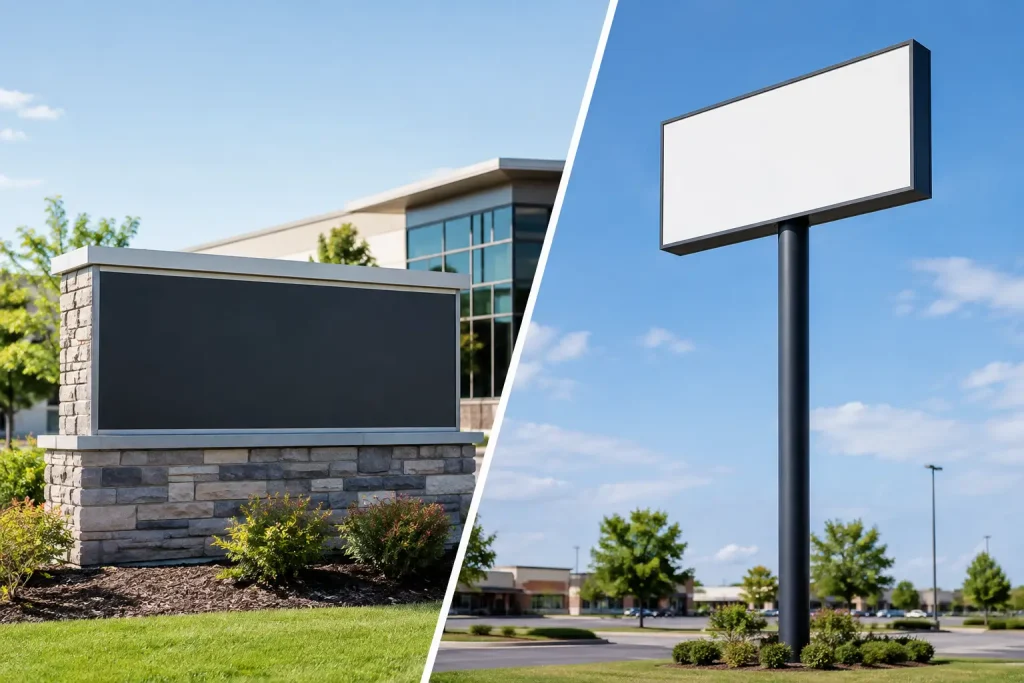
A monument sign is a ground-mounted sign built close to the finished grade. It typically has a wide base made from materials such as masonry, stone, brick, metal, or architectural panels that complement the building. The sign cabinet, lettering, tenant panels, or digital message area is incorporated into that low-profile structure.
A pole sign is elevated on one or more steel poles, placing the sign face higher above the ground. This height helps the message remain visible over parked vehicles, neighboring signs, landscaping, and roadside activity. Pole signs are common along highways, major arterials, retail corridors, and properties set back from the road.
Neither format is automatically better. A sign that looks appropriate at one site can be hard to see, out of scale, or restricted by local code at another. The best decision begins with a practical look at how people approach your property.
When a Monument Sign Makes the Most Sense
Monument signs are often the right fit when the property needs to look established, cohesive, and easy to enter. Their lower height makes them especially effective on streets with slower traffic, near office parks, at entrances to developments, and along roadways where drivers have time to read the message as they approach.
They also work well when architecture is part of the brand experience. A monument sign can carry colors, materials, and design elements from the building to the street. For a hotel, healthcare facility, church, school, apartment community, or professional office, that connection can make the property feel more intentional and easier to identify.
For multi-tenant sites, a monument sign can organize tenant names in a clean, readable format. This is useful where visitors are looking for a specific suite, restaurant, clinic, or service provider rather than making a split-second decision from several lanes away.
The trade-off is visibility at distance. A low sign may not be seen soon enough on a high-speed road, particularly if the building sits far back from the street or mature landscaping, utility lines, and parked cars block the view. Bigger lettering does not always solve a poor sightline. Sometimes the structure itself needs more height than a monument format can provide.
When a Pole Sign Is the Better Choice
Pole signs are built for visibility from farther away. Their added elevation is useful when drivers are moving quickly, when a business is behind another building, or when a property entrance is difficult to spot until the last moment. For retail stores, fuel stations, quick-service restaurants, shopping centers, and businesses near interstate exits, that advance notice can be a major advantage.
A pole sign can also help a smaller storefront compete visually on a crowded commercial strip. If neighboring properties have tall signs and the roadway is wide, a ground-level sign may be overlooked. Elevating the brand above the visual clutter gives customers more time to recognize the business and safely make a turn.
That visibility comes with considerations. Pole signs can feel less integrated with the building and may not suit a property aiming for a more upscale or neighborhood-oriented appearance. Local zoning rules may limit their height, sign area, location, illumination, or whether a new pole sign is permitted at all. In some districts, an existing nonconforming pole sign may be allowed to remain but cannot be enlarged or substantially rebuilt.
A pole sign also requires careful engineering. The pole, footing, cabinet, electrical components, and wind-load requirements all need to be designed for the installation. It is not simply a matter of setting a sign in the ground. Proper planning protects the investment and helps prevent costly changes later.
Visibility Is More Than Sign Height
Many sign decisions start with one question: “Which one can people see best?” The answer depends on how far away drivers need to recognize the sign and how much time they have to react. A sign viewed from a 25 mph access road has very different requirements than one viewed from a six-lane highway.
Road speed affects letter size, message length, and placement. Faster traffic needs a shorter message, larger copy, and earlier visibility. A pole sign may be the logical option in that setting. On a slower street or internal drive, a monument sign can be more than visible enough while providing a stronger sense of arrival.
Site conditions matter just as much. Review the sign location from each direction of travel, not only from the sidewalk in front of the building. Consider the building setback, drive entrances, median cuts, traffic signals, trees, streetlights, utility lines, and neighboring signs. A great sign location should give customers enough time to see the message, decide where to turn, and enter safely.
Illumination is another part of the visibility plan. Internally illuminated cabinets, illuminated channel letters, and digital message displays can improve nighttime legibility when allowed by local code. The electrical supply and control method should be planned early, especially for a new monument base or a tall pole structure where access and serviceability matter.
Cost, Maintenance, and Long-Term Value
Upfront cost varies by size, materials, foundation requirements, electrical work, illumination, and local permitting conditions. A monument sign may require a substantial base, masonry work, landscaping coordination, and utility routing. A pole sign may require engineered footings, steel fabrication, specialized installation equipment, and additional height-related labor.
For that reason, the lower sign is not always the less expensive option, and the taller sign is not always the premium option. A straightforward monument sign may be more economical than a large elevated structure, while an architectural monument with custom stone, multiple tenant panels, and a digital display can be a significant project.
Maintenance should be part of the conversation before the sign is built. Tenant panels may need to change. Lighting components will eventually need service. Digital displays need accessible controls and reliable electrical infrastructure. Pole signs require safe access for future repairs, while monument signs may need landscaping kept clear so plants do not cover the message.
The best long-term value comes from building a sign that fits the property now and can serve its likely future use. A retail center expecting tenant turnover may benefit from modular panels. A business with frequent promotions may need a permitted electronic message area. A professional office with a stable identity may place more value on durable architectural materials and a clean, timeless presentation.
Zoning, Permits, and Site Coordination
Before finalizing monument signs vs pole signs, check what the local jurisdiction allows. Louisville Metro and Southern Indiana communities can have different requirements for sign height, area, setbacks, illumination, electronic displays, and permitted sign types. A property may also be subject to private development standards or landlord restrictions that are more specific than the municipal code.
This early review can prevent a common problem: designing a sign that looks right on paper but cannot be permitted as proposed. Sign location must also avoid sight-distance concerns at driveways and intersections, and underground utilities must be identified before a foundation is installed.
At Rudnick Enterprises, we coordinate design, engineering, permitting, fabrication, electrical needs, installation, and future service so customers are not left managing several vendors. That is especially helpful when a sign project involves building power, a new foundation, site work, or a multi-tenant property with several decision-makers.
Choose the Sign That Helps Customers Find You
If your customers need to see you from a distance and make a quick turn, a pole sign may earn its place. If your property needs a strong entrance feature that complements the building and guides visitors at a slower pace, a monument sign may be the better investment.
A site visit and a clear look at traffic patterns can settle the question faster than comparing photos online. The right sign is the one that fits your brand, your property, your local requirements, and the way real customers arrive at your door.