



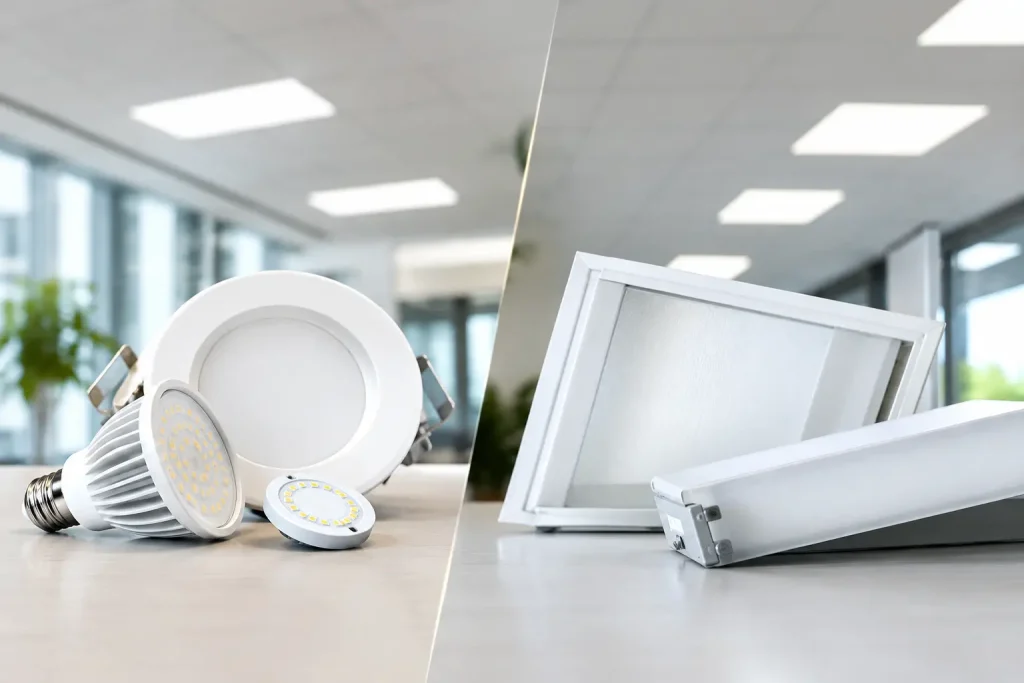
A failing light fixture is rarely just a lighting problem. In a retail store, restaurant, warehouse, office, or multi-tenant property, poor lighting affects safety, employee comfort, curb appeal, and the way customers see your business. The decision between LED retrofit vs fixture replacement can also affect your budget, installation schedule, electrical scope, and long-term maintenance needs.
The right answer is not always the lowest upfront price. A retrofit can be an excellent value when the existing fixture housing is sound and the light level is appropriate for the space. Full replacement may be the wiser investment when fixtures are worn out, poorly located, difficult to service, or no longer meet the building’s needs. A qualified electrical contractor can inspect the entire system, not just the lamp that stopped working, and help you make a decision that holds up over time.
LED Retrofit vs Fixture Replacement: The Core Difference
An LED retrofit updates an existing fixture with LED components. Depending on the application, that may mean replacing fluorescent tubes and ballasts with LED tubes, installing an LED retrofit kit inside a canopy or parking lot light, or updating the internal light source in a sign cabinet. The original housing generally remains in place.
Fixture replacement removes the old unit and installs a new LED fixture. This gives you a new housing, driver, optics, mounting system, and often better options for light distribution, controls, color temperature, and appearance. It can also be an opportunity to correct wiring, mounting, weatherproofing, or placement issues discovered during the project.
Both approaches can reduce energy use and eliminate frequent lamp changes. The difference comes down to the condition of what you already have and what the property needs next.
When an LED Retrofit Makes Sense
A retrofit is often the practical choice when existing fixtures are structurally sound, properly positioned, and still fit the visual character of the building. For example, a property with rows of well-maintained interior troffers may not need every housing removed simply to gain the benefits of LED lighting. Updating the light source can improve efficiency and reduce maintenance with less disruption to occupants.
Retrofitting can be especially useful when the fixture housing is part of a finished ceiling, a historic building detail, or a sign cabinet that is otherwise in good condition. Keeping the original enclosure may preserve the look of the space while modernizing its performance.
The installation cost may also be lower because there is less demolition and less material to replace. That matters in occupied commercial spaces where access, tenant schedules, and downtime affect the project. In some cases, a retrofit can be completed in phases so a business remains open and key areas stay illuminated.
Still, “lower cost” should not be assumed before an inspection. Older fixtures can hide brittle wiring, corroded sockets, failing ballasts, water intrusion, or damaged lenses. If technicians must repair several parts of each existing fixture before adding LED components, the savings can disappear quickly.
Questions to ask before retrofitting
Before choosing a retrofit, look at more than the age of the lamps. Ask whether the housings are free of rust and water damage, whether the fixture mounting is secure, and whether the current layout puts light where people need it. Consider whether existing circuits and controls are reliable, too.
Light quality matters as much as energy savings. An LED retrofit should provide the right brightness, color temperature, and distribution for the application. A bright retail sales floor, an office corridor, a building entrance, and a loading area each have different requirements. Replacing a light source without checking the photometrics can leave dark spots, glare, or uneven illumination.
When Fixture Replacement Is the Better Investment
Full fixture replacement is usually the better route when the existing equipment is at the end of its useful life. Corroded exterior housings, cracked lenses, bent poles or brackets, recurring electrical failures, and fixtures that leak or collect insects are all signs that keeping the old assembly may create more service calls later.
Replacement also makes sense when your lighting needs have changed. A former office converted into medical, retail, restaurant, or warehouse space may require a different light level and beam pattern. Exterior areas may need better coverage around entrances, sidewalks, parking areas, and loading zones. New fixtures allow the lighting plan to be designed around the current use of the property rather than the building’s original layout.
For customer-facing locations, appearance can be a deciding factor. Old fixtures with yellowed lenses or mismatched housings can make an otherwise well-kept storefront look neglected. New LED fixtures can provide a cleaner, more consistent presentation at the entrance, under canopies, along walkways, and around branded signage.
Replacement also provides greater control flexibility. New fixtures may be compatible with occupancy sensors, photocells, timers, dimming, daylight harvesting, and networked controls. Those features can reduce operating costs, but they must be selected and installed correctly. A control package that is too complicated for the property can become frustrating rather than useful.
Plan for the full scope, not just the fixture
Replacing fixtures can involve more than removing one unit and attaching another. Mounting points may need to be reinforced or modified. Exterior work may require new weatherproof connections, conduit repairs, junction boxes, or pole inspections. Interior work can expose ceiling damage, obsolete wiring, or circuit capacity concerns.
Commercial properties in Louisville and Southern Indiana also need to account for applicable permits, local requirements, and safe installation practices. A licensed and insured contractor can identify these needs early, coordinate the work, and keep the project from becoming a patchwork of separate electrical, lighting, and construction calls.
Compare Cost Over the Life of the Lighting System
Upfront cost is real, particularly for a large portfolio or multi-tenant property. A retrofit may cost less per location initially, while fixture replacement typically requires more labor and material. But the better value depends on the expected service life of every component that remains after the work is finished.
A retrofit installed in a healthy fixture can deliver a strong return. A retrofit installed in a deteriorating housing may only postpone replacement while adding another labor expense later. Conversely, replacing every fixture in a building that has sound, serviceable housings may spend capital that could be used for more urgent electrical or property improvements.
When reviewing estimates, compare the scope carefully. Look for fixture counts, fixture specifications, labor, disposal, controls, access equipment, electrical repairs, warranty coverage, and any permitting requirements. A clear proposal should explain what is being reused, what is being replaced, and what happens if concealed issues are found during installation.
Energy savings should be based on actual operating hours and wattage, not broad promises. A parking lot light that operates every night has a different payback profile than a storage-room fixture used occasionally. Maintenance savings deserve consideration as well, especially where lights are mounted high, above customer areas, or in locations that require lifts or specialized access.
Start With a Site-Specific Lighting Assessment
The most dependable way to choose is to walk the property and evaluate the lighting as a system. That means documenting fixture conditions, checking voltage and wiring, identifying dark or overlit areas, reviewing access challenges, and learning how the space is used throughout the day and evening.
For a business owner, the priority may be a brighter storefront and fewer service interruptions. A property manager may need a phased plan that works around tenants and addresses recurring maintenance costs. A developer may want a consistent fixture package that supports the property’s design standard and makes future replacements easier. Each goal can lead to a different answer.
Rudnick Enterprises approaches lighting projects with that broader view. Because electrical, lighting, signage, permitting coordination, and related construction needs can overlap, one experienced team can help identify the practical scope before work begins. The goal is not to sell the largest project. It is to install lighting that is safe, appropriate for the property, and done right.
If your current fixtures are solid and the lighting layout works, an LED retrofit may be the efficient next step. If the equipment is failing, the coverage is poor, or the property needs a cleaner and more capable lighting system, replacement can prevent years of avoidable repairs. Start with the condition of the building and the people using it, then choose the option that will keep the property well lit long after the installation crew has left.