



A lobby that is fully lit at 2 a.m., an empty stockroom with lights left on all weekend, or a dark entryway before the first employee arrives can all point to the same issue: lighting is operating without a plan. Well-designed lighting controls give property owners a practical way to manage energy use, improve safety, and make each space feel ready for the people using it.
For commercial properties in Louisville and Southern Indiana, the right approach is rarely a single switch or timer. A restaurant has different needs than a warehouse. A multi-tenant office building needs a different strategy than a retail storefront, medical office, or apartment common area. The goal is to put light where it is needed, when it is needed, without creating frustration for employees, customers, tenants, or maintenance teams.
What Lighting Controls Actually Do
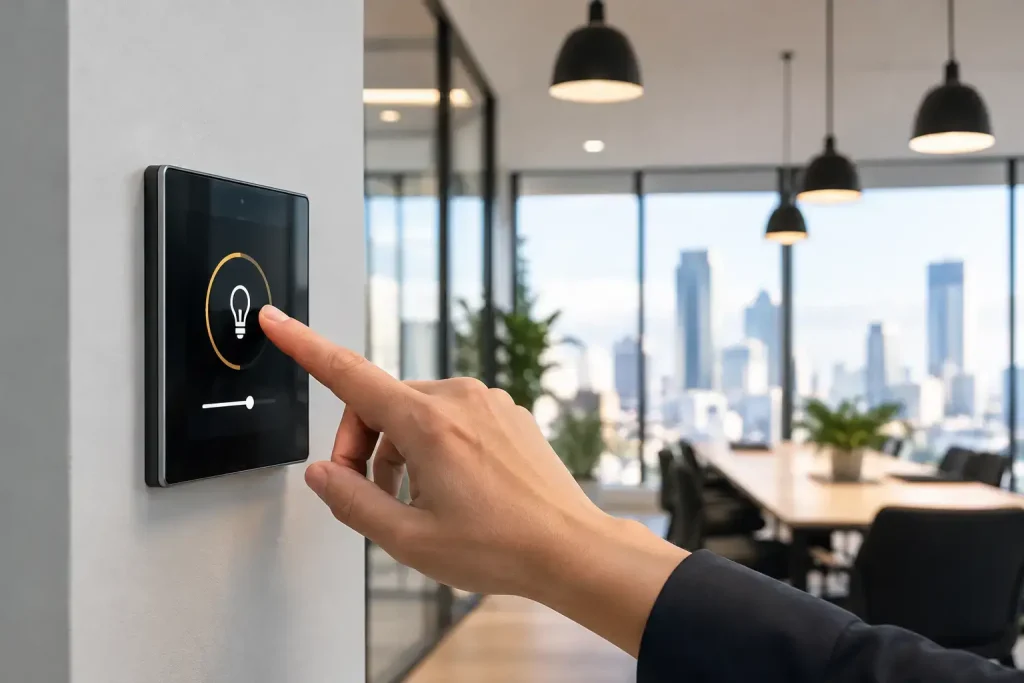
Lighting controls are the devices and programming that determine when lights turn on, turn off, dim, or respond to changing conditions. They can be simple, such as a wall-mounted occupancy sensor, or more coordinated, such as a system that schedules exterior, parking lot, lobby, and signage lighting from one central control point.
The best system does not make a property feel overly automated. It makes the building work better in the background. Employees should be able to enter safely. Customers should see a welcoming storefront. Tenants should have appropriate control in their own suites. Managers should not have to walk the property after hours looking for lights that were forgotten.
Controls also work especially well alongside an LED retrofit. LEDs already use less power than many older lamp types, but a fixture that burns unnecessarily still costs money. Pairing efficient fixtures with schedules, sensors, and daylight-responsive controls gives owners more control over both operating costs and maintenance planning.
The Main Types of Lighting Controls
The right mix depends on the building layout, hours of operation, daylight exposure, and how occupants use the space. In many properties, several control types work together.
Schedules and time clocks
Scheduled controls are useful where operating hours are predictable. They can turn lights on before opening, reduce lighting after staff leaves, and keep exterior areas illuminated during designated overnight hours. They are a strong fit for storefronts, offices, common areas, and exterior building lighting.
A schedule should leave room for real-world exceptions. Holiday hours, special events, inventory work, late cleaning crews, and tenant needs can make a rigid schedule frustrating. A good installation includes practical override options so authorized people can temporarily adjust lighting without disrupting the normal program.
Occupancy and vacancy sensors
Occupancy sensors automatically turn lights on when someone enters a space and turn them off after the area is vacant for a set period. Vacancy sensors require the user to turn the lights on manually, then switch them off automatically once the room is empty.
These controls are often valuable in restrooms, storage rooms, break rooms, private offices, utility areas, conference rooms, and back-of-house spaces. Placement matters. A sensor installed without considering shelving, partitions, door swings, or the normal path of movement may miss occupants or turn lights off too soon.
Daylight-responsive controls
Rooms with large windows, skylights, or glass storefronts can receive significant natural light during the day. Daylight-responsive controls use sensors to reduce electric lighting when daylight is sufficient. Depending on the setup, lights may dim gradually or switch off in zones closer to windows.
This approach can be effective in open offices, retail sales floors, schools, lobbies, and spaces with broad daylight exposure. It needs thoughtful calibration, though. Too much dimming can make a space feel uneven, while insufficient adjustment may eliminate the energy benefit. The goal is consistent, comfortable visibility rather than dramatic changes in brightness.
Dimmers and scene controls
Some spaces need more than an on-or-off choice. Dimmers and scene controls allow a property to set different lighting levels for specific activities. A restaurant may need brighter lighting for opening and cleaning, warmer lower-level lighting during dinner service, and brighter exterior lighting for closing staff. A conference room may need one setting for presentations and another for meetings or cleaning.
Scene controls also help properties create consistency. Instead of relying on staff to adjust multiple switches, a single preset can put the room at the right level for its purpose.
Exterior photocells and smart scheduling
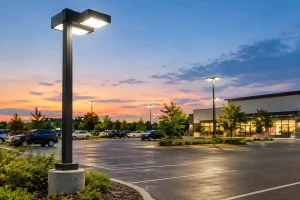
Exterior lighting should respond to changing sunset times, weather conditions, and seasonal daylight shifts. Photocells turn lights on when outdoor light drops below a set level. Astronomical time clocks use location and date information to follow sunrise and sunset schedules without constant manual adjustment.
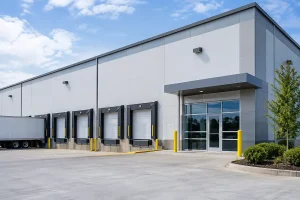
Parking lots, walkways, loading areas, building entrances, and illuminated business identification all depend on reliable exterior lighting. The balance is important: underlighting can create safety concerns, while unnecessary all-night lighting increases costs and can disturb nearby properties. A contractor can help establish appropriate zones and operating times for each area.
How to Plan Lighting Controls for a Commercial Property
The best starting point is not a product catalog. It is a walkthrough of how the property is actually used. Look at when each area is occupied, who needs control, where daylight enters, and which lights are routinely left on. Maintenance records and utility bills can also reveal opportunities, especially in large facilities or properties with older lighting equipment.
Next, divide the building into practical zones. A front lobby, office suite, restroom, hallway, warehouse aisle, loading dock, parking lot, and exterior sign should not necessarily operate on the same schedule. Zoning gives managers flexibility without adding unnecessary complexity.
It is also wise to consider code and permit requirements before work begins. Energy codes may require particular control strategies during renovations, additions, tenant build-outs, or lighting upgrades. Emergency and egress lighting have separate life-safety requirements and should not be treated like ordinary general lighting. A licensed electrical contractor can assess the existing system, coordinate the needed work, and help ensure the finished installation is done right.
Common Problems That Undercut Good Intentions
Property owners sometimes install sensors or timers to save energy, only to receive complaints soon afterward. Most of the time, the equipment itself is not the issue. The problem is planning, selection, installation, or programming.
A sensor with the wrong coverage pattern may not recognize someone sitting still at a desk. A timer may shut off lights while a cleaning crew is still working. A control panel may be placed where only one person knows how to use it. Controls installed during a remodel can also fail to account for how the space changes after furniture, racks, displays, or partitions are added.
Another common issue is trying to place too much of the property on one circuit or one control zone. This may reduce installation cost at first, but it often creates daily inconvenience. If lights in a tenant suite, corridor, and shared restroom all respond together, someone will eventually need light in one area while another should be off.
Commissioning is the step that prevents many of these problems. After installation, each device should be tested and adjusted under normal operating conditions. Time delays, sensor sensitivity, dimming levels, schedules, and manual overrides should be confirmed with the people who will use the building every day.
When an Upgrade Makes Sense
Lighting controls are worth considering when a property is replacing outdated fixtures, remodeling a tenant space, building an addition, addressing high utility costs, or correcting inconsistent exterior lighting. They are also useful when managers repeatedly deal with lights left on after hours or complaints about dark, uncomfortable, or overly bright areas.
For a smaller property, the answer may be a few carefully placed sensors, a programmable exterior control, and better zoning. For a larger building or multi-tenant site, a coordinated control system may make more sense. There is no benefit in adding features that a property manager will not use, so the solution should match the building, budget, and maintenance capabilities.
Rudnick Enterprises can evaluate lighting, electrical infrastructure, exterior visibility, and project requirements together, which helps reduce the back-and-forth that often comes with coordinating separate vendors. Whether the work involves a single troublesome area or a broader retrofit, the focus should stay on a system that is safe, serviceable, and practical for daily operation.
The most effective lighting controls are the ones people barely notice because the property is simply bright when it needs to be, efficient when it can be, and ready for business every day.