




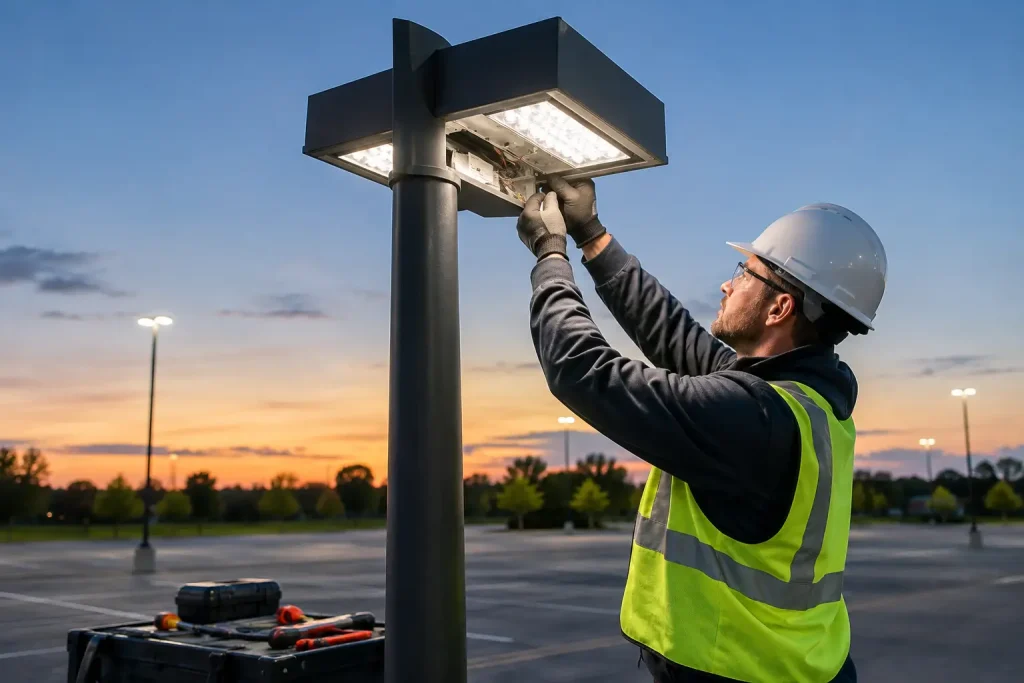
A parking lot light that flickers after dark does more than look unprofessional. It can create uneven visibility at entrances, sidewalks, drive lanes, and parking spaces – and it may point to an electrical or fixture problem that will get worse with time. Knowing how to repair flickering parking lot lights starts with identifying the pattern, checking the right components, and knowing where safe troubleshooting ends and licensed electrical service should begin.
For property managers, retail operators, restaurants, and multi-tenant properties, the goal is not simply to get a light back on for one night. The goal is a reliable, code-conscious repair that keeps the property safer and avoids repeated service calls.
Start With the Flicker Pattern
The timing and behavior of the flicker can narrow the diagnosis quickly. A light that flashes only when it first turns on may have a different issue than one that cycles on and off after operating for an hour.
Watch the fixture from a safe distance for several minutes. Does it flicker constantly, pulse intermittently, dim and brighten, or shut off and restart? Also note whether the problem affects one fixture, a row of fixtures, or the entire lot. If several lights on the same circuit flicker at once, the issue may be upstream at a photocell, contactor, electrical panel, shared connection, or voltage supply rather than inside each fixture.
Weather matters, too. A fixture that acts up only after heavy rain, freezing temperatures, or high winds may have moisture intrusion, a damaged gasket, a loose conductor, or a compromised pole connection. Documenting when the problem occurs gives your electrician a much better starting point.
Common Causes of Flickering Parking Lot Lights
Most parking lot lighting problems fall into a few practical categories. The right repair depends on the fixture type, age of the system, and condition of the circuit.
Failing LED driver or internal fixture component
Many modern parking lot fixtures use LEDs with an internal driver that converts incoming power for the light source. When the driver begins to fail, the fixture may flicker, strobe, dim unexpectedly, or cycle on and off. Heat, electrical surges, age, and water intrusion can all shorten driver life.
On some commercial fixtures, the driver can be replaced. On others, the labor and parts cost make full fixture replacement the more sensible long-term choice. A qualified technician can determine whether the fixture is serviceable and whether replacement parts are still available.
Loose, damaged, or corroded wiring
Vibration, temperature changes, moisture, and years of exposure can loosen wire connections inside a fixture, pole handhole, junction box, or control cabinet. Corrosion is especially common in outdoor equipment where seals, gaskets, or conduit connections have deteriorated.
A loose connection can produce intermittent flickering, excess heat, and damage to the fixture or wiring. This is not a repair to attempt by opening an energized pole base or fixture. Outdoor lighting circuits can involve high voltage, and damaged conductors may not be visible until the equipment is safely de-energized and inspected.
Photocell or lighting-control trouble
Photocells, timers, contactors, occupancy controls, and lighting-control panels tell parking lot lights when to operate. If a photocell is dirty, aimed poorly, failing, or picking up light from the fixture it controls, the system can cycle repeatedly around dusk and dawn.
This is sometimes called light feedback. The photocell senses darkness, turns the fixture on, then detects the fixture’s own light and turns it back off. Relocating, shielding, or replacing the photocell may correct the issue. A technician should also verify that the control is properly rated and wired for the load it serves.
Voltage drop or a supply-side electrical issue
A flicker across multiple poles can signal a circuit problem. Undersized conductors, overloaded circuits, deteriorated splices, failing breakers, or poor connections in electrical equipment can cause voltage fluctuations. These conditions can affect fixture performance and may damage drivers or other controls over time.
Electrical testing is required here. A licensed electrician can measure voltage under load, inspect terminations, and identify whether the fault is in the branch circuit, control equipment, panel, or utility-side service. Guessing at the cause can turn a repairable issue into an outage or a safety concern.
Water inside the fixture or pole
Outdoor fixtures are designed to handle weather, but no fixture remains weather-tight forever. Cracked lenses, failed gaskets, damaged conduit seals, and improperly installed components can allow water inside. Moisture may cause flickering at first, then corrosion, tripped breakers, or complete fixture failure.
If you see condensation, standing water, rust stains, or obvious damage, schedule service promptly. Replacing only a failed lamp or driver without addressing the water entry point usually leads to another failure.
How to Repair Flickering Parking Lot Lights Safely
The first practical step is to identify the affected fixtures, record the operating pattern, and check accessible controls without exposing anyone to energized equipment. Verify that the issue is not simply a programmed schedule change, a tripped lighting control, or a visibly obstructed photocell.
From there, the repair process should follow a safe sequence. A licensed electrician will typically isolate the circuit, lock out the power source, inspect the pole and fixture connections, test voltage and controls, and check for moisture or heat damage. Depending on the findings, the repair may involve tightening and re-terminating conductors, replacing a photocell or contactor, installing a new driver, repairing damaged conduit or splices, or replacing the fixture.
Fixture replacement is often the right move when older equipment has recurring failures, parts are no longer available, or the housing is corroded or leaking. It can also be an opportunity to improve light distribution and energy use. However, a replacement fixture must be selected for the mounting method, voltage, wattage, controls, and lighting needs of the site. Brighter is not always better. Poorly chosen fixtures can create glare, uneven coverage, or unwanted light spill onto neighboring properties.
When to Call a Commercial Electrician Immediately
Some symptoms should not wait for routine maintenance. Call for professional electrical service if you notice a burning smell, smoke, buzzing from a pole or panel, repeated breaker trips, exposed wiring, a leaning or damaged light pole, visible arcing, or lights that fail after storm damage.
The same applies when a parking lot becomes too dark for safe customer or employee use. Temporary measures may help manage the area, such as blocking off poorly lit spaces or adjusting operating procedures, but they are not a substitute for repairing the electrical problem. Property owners and managers have a responsibility to maintain reasonably safe conditions, especially around public access areas.
Rudnick Enterprises provides electrical troubleshooting and lighting repair for commercial properties throughout Louisville, Kentucky, and Southern Indiana. A licensed, insured team can assess the fixture, controls, pole wiring, and circuit together, so the repair addresses the source of the flicker instead of only its most visible symptom.
Prevent Repeat Failures With Routine Lighting Checks
Parking lot lighting is easy to overlook because it operates after most staff members have gone home. A scheduled nighttime inspection can catch problems before tenants, employees, or customers report them. Walk the property periodically and look for flickering, dark spots, uneven color, fixtures cycling on and off, damaged poles, and trees or signage blocking light.
For larger sites, keep a simple fixture map with pole numbers and notes on past repairs. This makes it easier to spot repeat trouble at the same location. A recurring issue may indicate a deeper circuit, drainage, or mounting problem rather than a failed fixture alone.
Regular service also allows contractors to inspect photocells, controls, gaskets, pole bases, and accessible connections before small issues become costly outages. It is a practical way to protect the appearance of the property while supporting safer nighttime access.
A flickering light may seem minor until it becomes a dark entrance, a failed circuit, or an after-hours service emergency. Address it while the symptoms are still clear, and you will have a better chance of making one well-targeted repair that stays done right.