



A dark sales floor, a breaker that will not stay reset, or a sign that suddenly loses illumination can interrupt far more than the electrical system. It can affect customer traffic, employee safety, tenant satisfaction, and daily revenue. Commercial electrical troubleshooting is the process of locating the actual cause of an electrical problem, correcting it safely, and verifying that the repair will hold up under normal operating conditions.
For a business or property manager, the goal is not simply to get the power back on. It is to understand why the issue happened, whether it creates a safety concern, and what needs to change to prevent another disruption. That requires a licensed electrical professional who can work methodically without guessing at the source of the problem.
What Commercial Electrical Troubleshooting Involves
Electrical issues in commercial buildings are rarely as simple as a bad switch or a single burned-out lamp. A facility may have multiple panels, tenant spaces, dedicated equipment circuits, exterior lighting, sign power, emergency systems, and equipment added during past renovations. The visible symptom may be far from the underlying cause.
A proper service call begins with information. When did the problem start? What equipment was operating at the time? Does it happen only during certain weather conditions, business hours, or after a particular machine starts? These details help narrow the investigation before testing begins.
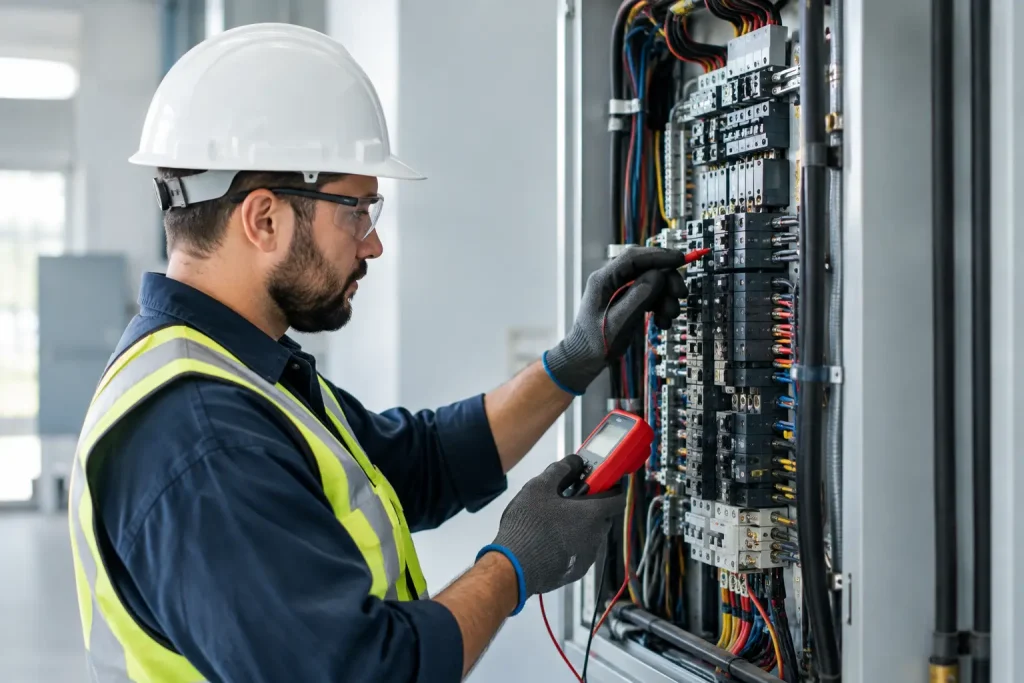
From there, an electrician may inspect panels, breakers, disconnects, outlets, switches, fixtures, wiring connections, controls, and equipment circuits. Meter testing can identify voltage loss, overloaded circuits, poor connections, grounding problems, damaged conductors, and failing components. The exact path depends on the building and the symptoms. A restaurant with a recurring kitchen circuit issue needs a different approach than an office building with intermittent parking lot lights.
The work should also account for code requirements and the condition of the existing installation. A repair that restores operation but leaves unsafe wiring, an overloaded panel, or an improperly protected circuit in place is not a complete solution.
Common Problems That Require Electrical Troubleshooting
Breakers That Trip Repeatedly
A breaker trips to protect the circuit. Resetting it once after an isolated event may be appropriate, but a breaker that trips repeatedly is giving you useful information. The circuit may be overloaded, there may be a short circuit, or connected equipment may be developing a fault.
In commercial spaces, changes in use often contribute to overloads. A retail tenant may add display lighting, point-of-sale equipment, refrigeration, or seasonal décor to a circuit that was already near capacity. In an office, added workstations and plug-in heaters can create a similar issue. The right repair may be redistributing loads, installing a dedicated circuit, or addressing defective equipment. It depends on what the testing shows.
Partial Power Loss
When some outlets, lights, or equipment work while others do not, the issue may involve a branch circuit, a tripped protective device, a loose connection, or damage between the panel and the affected area. Partial outages should not be treated as minor inconveniences, especially if lights flicker, receptacles feel warm, or the problem comes and goes.
Intermittent power is often more difficult to diagnose than a complete outage because the condition may disappear during an inspection. A careful technician may need to test under load, inspect connections in the affected path, and review whether vibration, moisture, or heat is contributing to the failure.
Flickering or Failed Lighting
Lighting problems can originate in the fixture, lamp, driver, ballast, photocell, timer, contactor, control system, wiring, or supply circuit. That is why replacing lamps alone may not solve recurring failures.
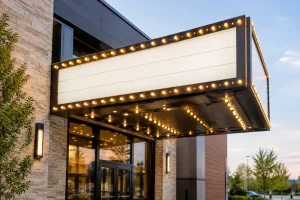
Exterior lighting and illuminated business signs deserve particular attention because they affect visibility, customer perception, and site safety. Water intrusion, damaged conduit, worn components, and aging connections can cause inconsistent operation. In some cases, a lighting retrofit is more practical than repeatedly repairing older equipment. In others, a focused repair is the most cost-effective option. A professional assessment helps distinguish between the two.
Hot Outlets, Burning Odors, or Buzzing Sounds
These symptoms should be treated as urgent. Heat, odor, discoloration, buzzing, or visible sparking can point to loose connections, overloaded equipment, damaged devices, or wiring failures. Turn off power to the affected area if it can be done safely, keep people away from the equipment, and contact a qualified electrician promptly.
Do not continue resetting breakers or using an outlet that shows signs of overheating. A temporary workaround can turn a repair issue into a larger safety event.
Why Quick Fixes Can Cost More
A quick reset may restore operation, but it does not explain why the circuit opened. Replacing a breaker without identifying the downstream fault can lead to another trip. Swapping fixtures without checking voltage or connections can leave the actual problem untouched.
This matters most in facilities where downtime carries a clear cost. A failed circuit can shut down refrigeration, kitchen equipment, point-of-sale systems, security equipment, production tools, or tenant operations. It can also create after-hours concerns when exterior lighting, signage, or entry lighting is affected.
Commercial electrical troubleshooting should balance speed with accuracy. The first priority is making the area safe and restoring essential operations where possible. The next is finding the root cause and explaining the repair options in plain language. Sometimes the answer is a straightforward component replacement. Sometimes testing reveals that a panel, circuit, or wiring section needs a more substantial upgrade.
A Practical Response When Electrical Problems Start
Business owners and managers can help make service faster without attempting electrical repairs themselves. Note which areas are affected, whether breakers have tripped, what was running when the issue appeared, and whether the problem is constant or intermittent. If safe to do so, take a photo of the affected panel label, fixture, or equipment display.
Avoid repeatedly resetting a breaker, removing panel covers, or working around damaged electrical equipment. These actions can increase risk and make diagnosis harder. If there is smoke, sparking, significant heat, water near electrical equipment, or an active loss of critical power, treat the situation as an emergency and secure the area.
For property managers, documenting prior repairs can also be valuable. A pattern of failures in the same suite, exterior area, or circuit often reveals a broader issue that deserves attention rather than another isolated repair.
When an Upgrade Is Better Than Another Repair
Not every electrical issue calls for replacement, but recurring problems should prompt a broader conversation. Older panels may lack capacity for current loads. Existing circuits may not reflect how a tenant space is used today. Exterior lighting systems may have reached a point where repeated repairs cost more than a planned retrofit.
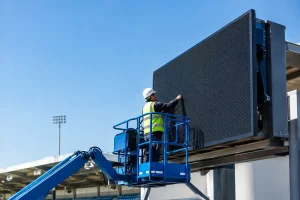
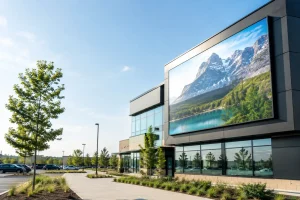
Remodels, additions, new signage, and equipment changes are good times to review electrical capacity. Planning the electrical work alongside the visible improvements can prevent delays and avoid having multiple contractors revisit the same areas. For example, a new building sign may require electrical service, controls, conduit, permitting coordination, and future maintenance access. Handling those details together helps keep the project organized.
Rudnick Enterprises works with commercial property owners and operators throughout Louisville and Southern Indiana to investigate electrical issues, complete repairs, and coordinate related lighting and sign work when a project calls for it. The focus is practical: understand the problem, explain the options, and complete work that supports safe, dependable operation.
Choosing the Right Electrical Partner
Commercial properties need more than a technician who can replace a part. Look for a licensed and insured contractor with experience working around active businesses, tenant schedules, building access requirements, and local permitting expectations. Clear communication matters just as much as technical ability when an outage affects customers or tenants.
Ask what caused the problem, what was tested, and whether the repair addresses the root issue or only restores temporary operation. A dependable contractor should be comfortable explaining the findings without burying you in jargon. You should also know what work is recommended now, what can be planned for later, and how the repair will affect normal business activity.
Electrical problems are disruptive, but they do not have to become a long-running source of stress. A careful diagnosis and a repair done right can protect your facility, keep your business moving, and give you a clearer path for the next improvement.