



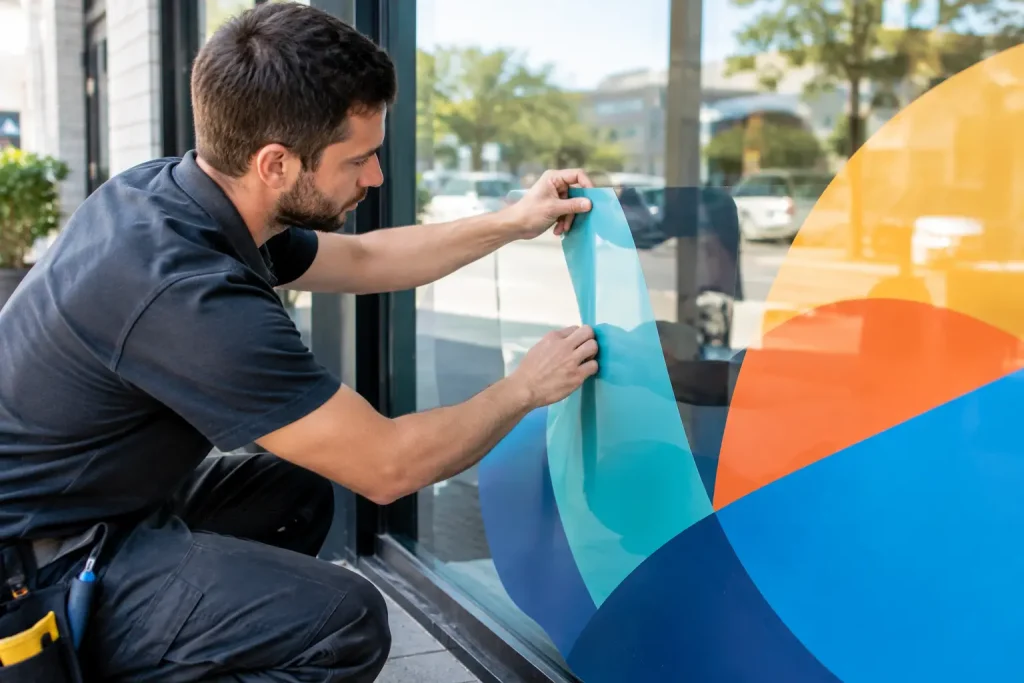
A blank storefront window is valuable space that many businesses leave unused. It can introduce your brand before a customer reaches the door, promote a seasonal offer, provide privacy, or make a vacant suite look ready for its next tenant. Professional storefront window graphics installation turns that glass into a clear business asset without making the entrance feel dark, cluttered, or temporary.
For retail stores, restaurants, offices, medical practices, and multi-tenant properties across Louisville and Southern Indiana, the best result starts well before installation day. The graphic has to fit the window, the brand, the building, the local requirements, and the way people actually approach the property.
Start With What the Window Needs to Do
Window graphics are not one-size-fits-all. A downtown restaurant may need bold hours, a logo, and enough open glass for customers to see activity inside. A salon or medical office may need greater privacy while still allowing daylight in. A property manager marketing an available suite may need an easy-to-update message that presents the space professionally from the street.
Before choosing a material or layout, consider the viewing distance and direction of traffic. A message seen from a passing vehicle needs fewer words and stronger contrast than one intended for pedestrians standing a few feet away. Door graphics also need to account for safety markings, handles, operating hours, and clear access to the entrance.
Good design is not simply putting a logo on glass. It is deciding what a visitor should notice first, what they should understand next, and what information can be left out. Too much copy, too many colors, or graphics placed across every pane can weaken the message rather than strengthen it.
Choosing the Right Window Graphic Material
The right film depends on the purpose of the graphic, the glass condition, exposure to sunlight, and whether the message is permanent or temporary. A qualified sign professional can explain the options in plain language and recommend a solution that supports the property rather than creating a maintenance problem.
Vinyl lettering is a practical choice for business names, hours, phone numbers, web addresses, and simple promotional messages. It provides a clean appearance and works well when the goal is to preserve an open view into the business. Frosted or etched-look film can add privacy and a polished finish to offices, conference rooms, storefront partitions, and glass entry doors.
Full-color printed graphics are useful when photography, detailed branding, or campaign artwork is central to the message. They can cover a portion of the glass or create a larger visual statement across multiple panes. Perforated window film is often selected for storefronts that want strong exterior graphics while maintaining visibility from inside. However, performance depends on lighting conditions, the percentage of coverage, and whether the glass receives intense sun or weather exposure.
The material is only part of the decision. A graphic installed on the inside surface may be protected from weather but can appear differently through tinted glass. Exterior installation may provide better color impact in some situations while facing more direct exposure. These details should be evaluated during the site review, not guessed at after production.
Why Accurate Measuring Matters
Glass openings are rarely as simple as they appear in a photo. Mullions, door closers, panic hardware, transom windows, uneven frames, and existing decals all affect the final layout. A professional measure verifies each pane and identifies obstacles before artwork goes to production.
This is especially important when graphics continue across several windows. Even a small measuring error can make a continuous image look misaligned at the seams. On older buildings, glass may not be perfectly square, and frames may vary slightly from one opening to the next. Adjusting the artwork for real field conditions is part of doing the job right.
A site visit also reveals issues that can affect adhesion. Old adhesive residue, silicone overspray, failing paint around the frame, cracked glass, heavy oxidation, and window-film tint can all require attention. Applying new graphics over an unprepared surface may save time for a day, but it can lead to lifting edges, bubbles, or premature failure.
The Storefront Window Graphics Installation Process
A dependable installation follows a straightforward process: consultation, field verification, design and production, surface preparation, and final inspection. Keeping those stages connected prevents the common handoff problems that occur when several vendors are involved.
During consultation, the installer should ask practical questions: Is the graphic intended to attract new customers, create privacy, announce a promotion, or support a tenant opening? How long should it remain in place? Does the landlord have graphic standards? Are there local sign requirements that affect size, location, or illumination nearby?
Once the layout is approved, the installation crew schedules work around business operations when possible. For a restaurant, that may mean early morning work before service. For a retail location, it may mean coordinating around deliveries, customer traffic, and seasonal merchandising. A clean installation area matters because dust, moisture, and temperature can affect the finish.
The glass is thoroughly cleaned with products appropriate for the surface, then dried and inspected. The installer aligns the graphic carefully before applying it, working methodically to reduce air pockets and wrinkles. Large printed panels require particular attention at edges and seams. After application, the crew trims around hardware where needed and checks the graphic from both inside and outside the building.
A finished storefront should look intentional from the curb, at the door, and from inside the business. The visual quality of an installation is often determined by small details: level lettering, even spacing, clean corners, and graphics that do not interfere with handles, sightlines, or required door markings.
Permits, Property Rules, and Safety Considerations
Window graphics may seem simpler than a building sign, but they can still be subject to local regulations, landlord criteria, and property standards. Rules may address the amount of window area covered, signage facing public streets, tenant branding, and required visibility through entry doors. Requirements differ by location and project scope.
For businesses opening a new location, this is one reason to involve a knowledgeable local contractor early. A coordinated team can review the storefront graphics alongside wall signs, wayfinding, lighting, and electrical needs. That reduces duplicate site visits and helps keep the overall exterior presentation consistent.
Safety should remain part of the plan. Graphics on entrance doors should not make the glass difficult to see, particularly where customers enter and exit frequently. Clear, visible door markings and unobstructed access matter as much as the promotional message. If a window graphic is part of a larger renovation, it should also coordinate with any electrical work, sign mounting, or exterior improvements planned for the property.
Common Problems That Shorten Graphic Life
Most premature failures trace back to a few avoidable issues. Poor surface prep is a frequent cause, especially when residue from old decals remains on the glass. Installing in unsuitable temperatures or on damp glass can also affect adhesion. So can selecting a material that is not rated for the expected exposure.
Design choices matter, too. Dark, full-coverage graphics can make a small interior feel closed in. Fine type may become unreadable from the road. A temporary promotion printed as a permanent graphic can create unnecessary replacement costs when the offer ends.
To protect the investment, avoid abrasive cleaners, razor blades, and aggressive scraping around graphic edges. Use a soft cloth and a mild cleaner compatible with the film. If an edge begins to lift, address it early rather than allowing dirt and moisture to work underneath.
A Better Fit for Growing Businesses and Properties
Storefront graphics work best when they are treated as part of the property, not an afterthought. They should support the building sign, exterior lighting, customer wayfinding, and the experience people have as they arrive. That is particularly useful for businesses opening, relocating, remodeling, or updating their brand.
Rudnick Enterprises helps clients coordinate branded graphics with signage, permitting, electrical, lighting, and related construction work, so the project stays organized from the first conversation through installation. Whether the need is simple window lettering or a full storefront refresh, the goal is the same: a professional result that represents the business well and holds up in the field.
The strongest window graphics do not try to say everything. They give customers one clear reason to notice the storefront, one easy way to identify the business, and a confident first impression that makes walking through the door feel like the natural next step.