



A new sign can look perfect in a rendering and still fail to do its job if it is mounted poorly, underpowered, or delayed by permit issues. Building sign installation is where branding, construction, electrical work, and local code requirements meet. For a business owner or property manager, getting that work right protects the investment, keeps the property looking professional, and helps customers find the front door.
The installation itself may happen in a day or two, but the work that determines its success starts much earlier. A dependable sign contractor looks at the building, the visibility from the street, the available electrical service, the mounting surface, local sign rules, and the long-term service needs before setting an installation date.
Start With the Building, Not Just the Sign
Every property presents its own conditions. A channel letter sign on brick requires a different mounting plan than a cabinet sign on metal siding, an architectural panel system, or a sign installed above a multi-tenant storefront. Older buildings may have hidden conditions behind the façade. New construction may have a clean installation area but require close coordination with the general contractor, electrician, and final inspection schedule.
A site survey is the point where assumptions become a workable plan. The installer should verify wall dimensions, mounting heights, material type, access for lifts or cranes, pedestrian and vehicle traffic, and nearby utilities. They should also review whether the sign will be visible at the distance and angle customers actually approach the property.
For property managers, this step is especially useful because it identifies conflicts before crews arrive. A sign location may interfere with a roofline, an awning, exterior lighting, sprinkler piping, or another tenant’s sign band. Addressing those details early is far less disruptive than changing a plan after fabrication is complete.
Electrical Planning Is Part of Building Sign Installation
Illuminated building signs need more than an available outlet. They need a properly planned electrical connection that meets code, supports the sign load, and remains accessible for future service. Depending on the sign type and existing conditions, the project may involve a new dedicated circuit, a disconnect, conduit, transformers or power supplies, timers, photocells, and repairs to aging wiring.
The right electrical approach depends on the building. A small storefront sign may tie into an existing exterior circuit if capacity and code conditions allow. A large illuminated sign, digital display, or multi-sign property may need an electrical upgrade. Skipping that evaluation can lead to nuisance tripping, inconsistent lighting, exposed wiring, or a sign that cannot pass inspection.
This is one reason a one-team approach matters. When the sign contractor and electrical team coordinate the work, the mounting method, wire routing, service access, and final appearance can be planned together. The customer does not have to sort out where the sign company’s responsibility ends and the electrician’s begins.
Safety and service access matter after opening day
A sign should be secure, but it should not be installed in a way that turns a basic repair into a major construction project. Power supplies, disconnects, and service points need to be safely reachable. Wiring should be protected from weather and physical damage. Fasteners and penetrations should be properly sealed so the installation does not create water-entry problems at the building envelope.
These details are easy to overlook when everyone is focused on the opening date. They matter years later when a technician needs to diagnose an outage, replace a component, or inspect a sign after severe weather.
Permits, Engineering, and Local Requirements
Sign regulations vary by municipality, zoning district, road type, and property use. A sign that is acceptable in one location may be too large, too tall, too bright, or placed in the wrong area on another property. In Louisville and Southern Indiana communities, rules can also differ from one jurisdiction to the next.
Permit review commonly considers sign area, height, projection from the building, illumination, setbacks, and the number of signs allowed. Multi-tenant properties may have approved sign criteria that are more restrictive than local code. Landlords, shopping centers, and franchise brands often require specific colors, layouts, materials, and installation standards as well.
Some installations also require engineered drawings or structural calculations. This is particularly common when a sign is large, elevated, attached to a complex façade, or exposed to significant wind loads. Engineering is not unnecessary paperwork. It confirms that the building connection and sign structure are designed for the forces they will face over time.
A professional contractor coordinates these requirements before fabrication and installation whenever possible. That helps avoid a costly situation where a finished sign must be resized, relocated, or held in storage because a permit has not been approved. It also gives owners confidence that the work is being handled responsibly.
The Installation Day Should Feel Organized
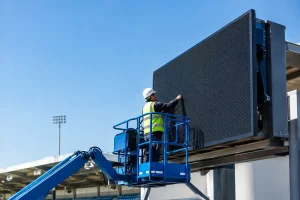
A well-managed installation day is rarely chaotic. The crew should arrive with the right equipment, reviewed plans, appropriate safety gear, and a clear understanding of site access. For one project, that may mean a ladder crew working before a retail store opens. For another, it may require a bucket truck, crane, lane control, lift equipment, or coordination around delivery traffic.
Good communication makes a noticeable difference. Store managers need to know if entrances, parking spaces, or sidewalks will be temporarily affected. Property managers need an accurate schedule and confirmation of insurance requirements. On active construction sites, installers need to work within the broader jobsite safety and sequencing plan.
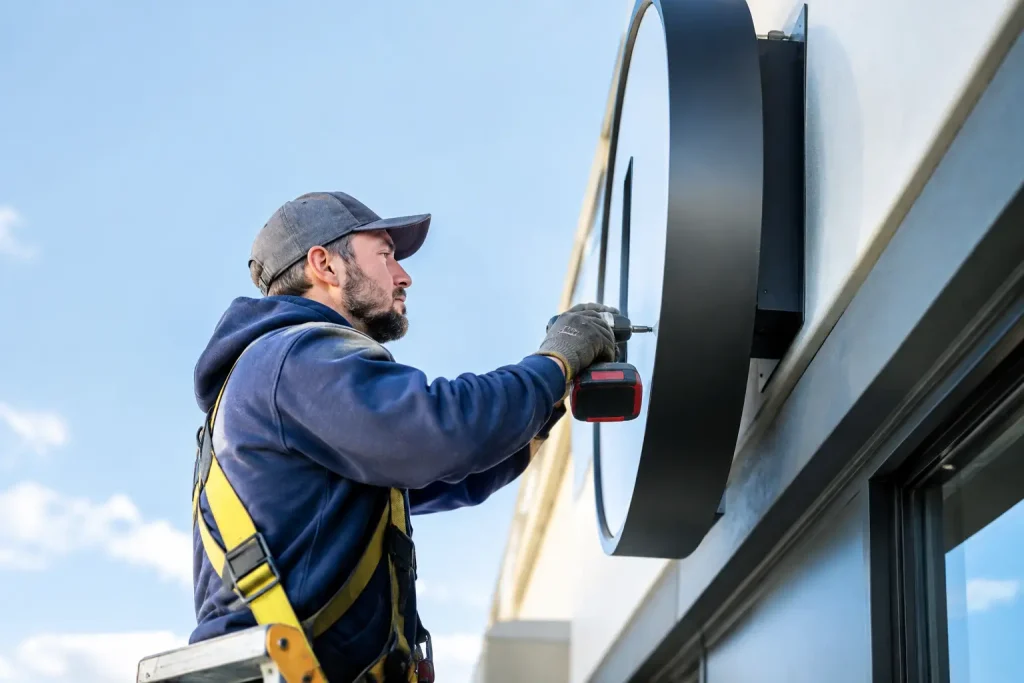
The physical installation includes more than lifting the sign into place. Crews lay out the location, confirm level and alignment, drill and anchor according to the approved method, route electrical connections, seal penetrations, test illumination, and clean the work area. The finished result should look intentional from both close range and across the parking lot.
Weather can change the plan
Weather is a real factor in exterior sign work. High winds can make lift or crane work unsafe. Heavy rain can interfere with sealing and electrical connections. Freezing conditions may affect certain materials and site access. A contractor who reschedules for safety or quality is protecting the project, not slowing it down without reason.
There is also a balance between speed and coordination. A restaurant preparing for a grand opening may need an aggressive schedule. A medical office or occupied apartment building may need installation planned around patients, residents, and daily operations. The right plan fits the property instead of forcing every job into the same process.
Choose Materials and Mounting for the Long Term
Building signs live outdoors through heat, cold, rain, wind, sun exposure, and seasonal temperature changes. Materials and installation methods should match those conditions. The least expensive option is not always the best value if it fades quickly, allows water behind the sign, or requires frequent repair.
Mounting hardware must suit the wall construction and the sign weight. Masonry, concrete, metal panels, wood framing, EIFS, and decorative façades all need different care. An installer also needs to consider how to preserve the building finish and properly seal every penetration. That is particularly important on newer properties, where an avoidable leak can create warranty and maintenance concerns.
Illumination choices affect maintenance as well. Quality components, correct power planning, and clean installation practices make future service simpler. For property owners managing several locations, consistency in sign construction and electrical setup can reduce confusion when repairs are needed later.
Plan for Maintenance Before Something Goes Dark
A building sign is not a one-time purchase. Even well-built signs need periodic attention. Lighting components age, electrical connections can loosen, weather can affect seals, and accidental damage can happen. Regular visual checks help catch issues while they are still small, such as a dim letter, damaged face, flickering section, loose trim, or water intrusion.
It helps to keep basic project information on file: permit records, approved drawings, electrical details, paint or color specifications, and service history. This is valuable when a property changes hands, a tenant remodels, or a repair is needed after hours. A contractor familiar with the original installation can often troubleshoot more efficiently, but clear records support any future service work.
Rudnick Enterprises approaches signage as part of the property, not as a separate decorative item. With licensed, insured capabilities across signs, electrical, lighting, and related construction work, the team can coordinate the details that often create delays when multiple vendors are involved.
The best time to make building sign installation easier is before the sign is fabricated. Bring in an experienced team early, ask practical questions about permits, electrical capacity, mounting, and future service, and give the project enough room for the details to be done right. The result is a sign that represents the business well every day it is on the building.