




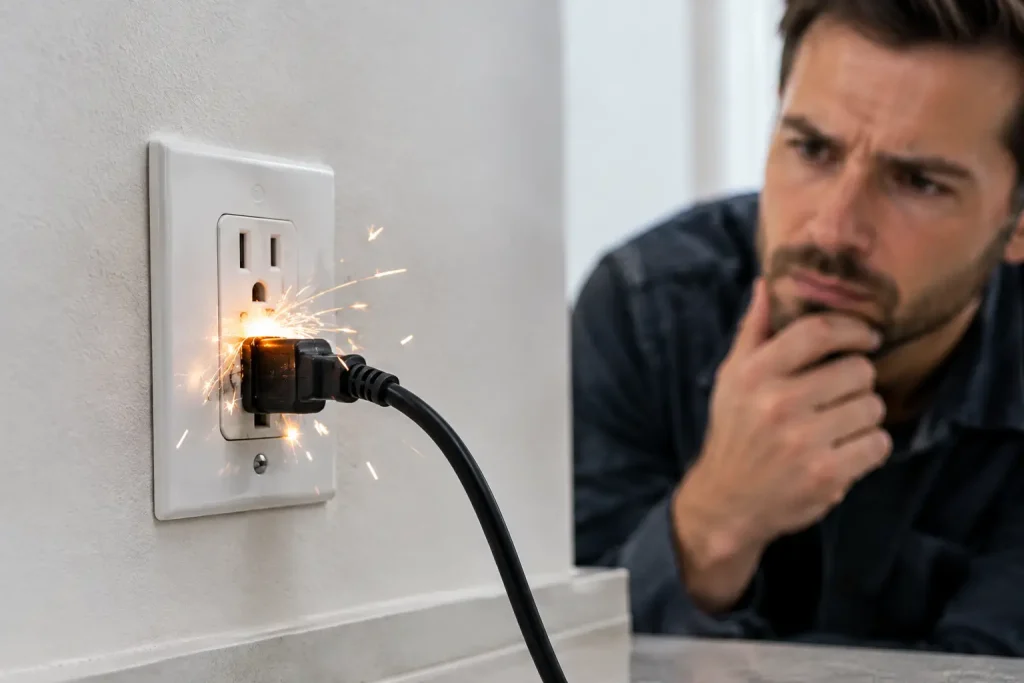
A quick blue flash when you plug in a phone charger can be unsettling, especially in a storefront, office, restaurant, or home where reliable power matters. Understanding why outlets spark helps separate a brief, normal electrical arc from a warning that the outlet, wiring, or connected equipment needs professional attention.
A spark is electricity crossing a small air gap. That can happen for an instant as metal plug prongs make contact with energized outlet contacts. But a spark should never be treated as routine if it is large, repeated, accompanied by heat or odor, or happens when nothing is being plugged in. Those signs can point to a condition that deserves prompt electrical troubleshooting.
Why Outlets Spark During Normal Use
Some appliances draw power the moment they are connected. Chargers, televisions, computers, microwaves, refrigerators, power tools, and equipment with motors or internal power supplies can create a small inrush of current when plugged in. If the plug enters at a slight angle, current may bridge the tiny gap before both prongs are fully seated, producing a brief spark.
A small spark that occurs only as a plug is inserted, with no sound, smell, discoloration, or heat, may be normal. The outlet should still hold the plug securely, and the appliance cord should be in good condition. If either feels loose, worn, or damaged, stop using it until the issue is checked.
The situation is different when a spark is bright, loud, prolonged, or frequent. A popping sound, visible burn mark, buzzing, or warm cover plate is not a normal plug-in event. Those symptoms can indicate deteriorated connections, an overloaded circuit, or a failing outlet device.
Common Problems That Make an Outlet Spark
Electrical outlets wear over time. The internal metal contacts that grip plug blades can loosen after years of use, particularly at high-traffic locations such as service counters, break rooms, hotel rooms, reception areas, and workshop stations. Loose contact creates resistance. Resistance creates heat, and heat can lead to arcing and damage inside the electrical box.
Loose wiring is another concern. An outlet may have a wire connection that was not secured properly, has loosened through use or vibration, or has deteriorated from heat. In commercial spaces, this may be more likely on circuits serving repeated loads such as cleaning equipment, point-of-sale stations, refrigeration, kitchen equipment, or tenant improvements. The outlet may still appear to work until the connection begins to arc under load.
Overloaded circuits can also contribute to sparking and overheating. A power strip does not add capacity to a circuit. When too many devices share one branch circuit, the wiring and outlet can be asked to carry more current than intended. Breakers are designed to protect against overcurrent, but persistent overloading can still stress devices and connections before a breaker trips.
Damaged plugs and cords deserve equal attention. Bent prongs, cracked insulation, exposed conductors, loose plug blades, or cords pinched by furniture can create a poor connection at the outlet. In many cases, the appliance cord is the immediate problem, not the building wiring. An electrician can help identify the source, especially when the same outlet sparks with multiple devices.
Moisture changes the equation. Outlets near sinks, entryways, outdoor areas, kitchens, bathrooms, or utility rooms need the right protection for the location. Water or humidity can create a path for current where it does not belong. If an outlet has been wet, has visible corrosion, or repeatedly trips a ground-fault protection device, do not continue resetting it or using it.
When an Outlet Spark Is an Electrical Safety Issue
Treat these signs as a reason to stop using the outlet and arrange service:
- The outlet is hot, smells burnt, buzzes, crackles, or shows brown or black discoloration.
- A spark appears when a device is already plugged in or when no plug is moving.
- Plugs fall out easily, feel loose, or require pressure to stay connected.
- The breaker trips repeatedly, lights dim when equipment starts, or nearby outlets stop working.
- The outlet was exposed to water, impact damage, or smoke.
If you see smoke, flames, or active sparking, move people away from the area and call emergency services. Do not touch the outlet, cord, or equipment. If it is safe to do so without approaching the damaged area, shut off power at the breaker. Electrical fires can develop inside a wall or electrical box, where damage is not immediately visible.
For a business owner or property manager, an outlet issue can affect more than one receptacle. A single failing connection may interrupt a tenant’s equipment, disable lighting controls, create a safety concern for employees, or expose a property to avoidable downtime. Fast diagnosis matters because the visible outlet may only be the first sign of a larger circuit issue.
What a Licensed Electrician Checks
Electrical troubleshooting should identify the cause, not simply replace the faceplate or outlet and hope the problem is gone. A licensed electrician starts by assessing the device, the wiring connections, the circuit load, and the condition of connected equipment. The work may include testing voltage, checking grounding and polarity, inspecting the electrical box, and looking for heat damage or loose conductors.
The right repair depends on what the testing shows. It may be a straightforward outlet replacement, a cord replacement, a tightened connection, or the installation of the correct protective device for the location. In other cases, the circuit may need to be redistributed, upgraded, or repaired farther upstream. Older buildings and remodeled spaces sometimes contain wiring arrangements that no longer match current use, especially after additional equipment, displays, workstations, or lighting have been added.
Commercial properties also need repairs that account for code requirements, occupancy, access, and daily operations. A repair near a customer area may need to be scheduled around business hours. A restaurant or retail location may require a temporary plan to keep essential equipment running. The goal is not just to restore power, but to make the repair safe, code-conscious, and practical for the way the space operates.
Preventing Outlet Problems Before They Interrupt Business
A few habits can reduce outlet wear and help catch problems early. Avoid forcing plugs into a receptacle or relying on loose outlets to hold heavy adapters. Use equipment cords that are properly rated and in good condition. Keep extension cords temporary rather than using them as permanent wiring, and avoid daisy-chaining power strips.
For property managers, scheduled electrical maintenance is especially useful in spaces with frequent tenant turnover, high-use common areas, older electrical systems, or a growing amount of plugged-in technology. During renovations, signage installations, lighting upgrades, and equipment additions, it is worth confirming that existing circuits have the capacity for the new load. A visible new feature is only as dependable as the electrical infrastructure supporting it.
Rudnick Enterprises provides electrical troubleshooting and repair for commercial and residential properties throughout Louisville and Southern Indiana. When an outlet sparks, a hands-on inspection can determine whether the issue is a worn device, a damaged cord, a circuit concern, or something that requires a broader repair.
A small plug-in flash may be ordinary, but your instincts matter. If an outlet looks, sounds, smells, or feels wrong, stop using it and have the source checked before a minor warning becomes an interruption, a damaged circuit, or a safety hazard.