




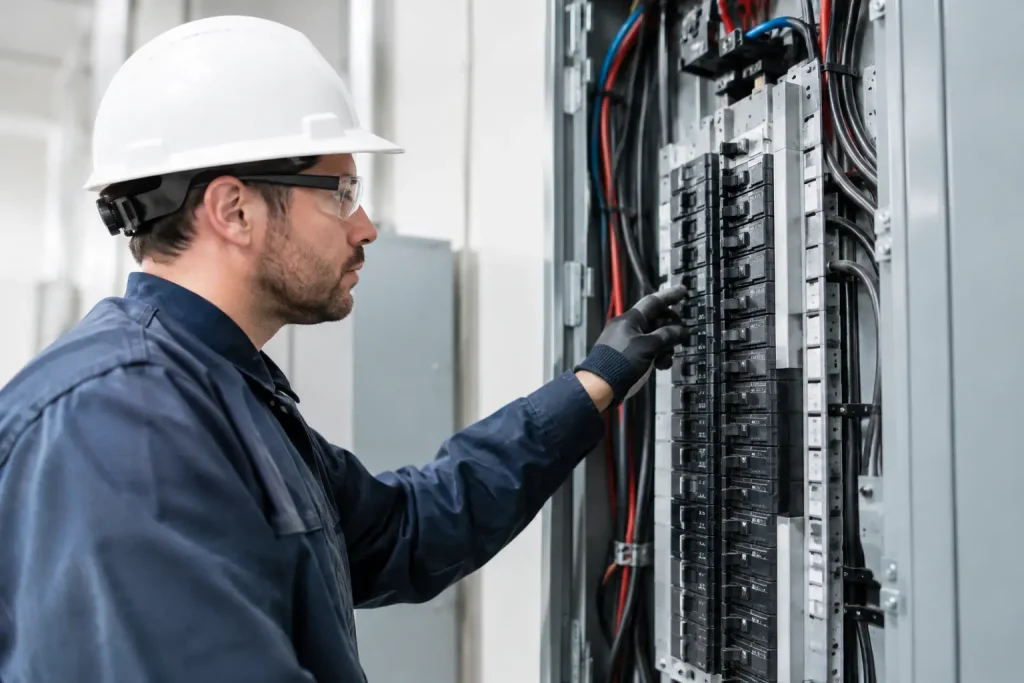
A breaker that trips once during a busy shift may be inconvenient. A breaker that keeps tripping can disrupt point-of-sale equipment, kitchen operations, tenant spaces, exterior lighting, and customer-facing signs. Understanding why breakers trip helps property owners and managers respond safely instead of repeatedly resetting a device that is doing its job.
A circuit breaker is a protective switch. It shuts off power when it detects conditions that could overheat wiring, damage equipment, or create a fire or shock hazard. The cause may be as simple as too many devices on one circuit, but recurring trips can also point to aging equipment, water intrusion, damaged wiring, or a problem inside a connected appliance or sign.
Why Breakers Trip: The Main Causes
The breaker is not usually the problem. It is responding to something happening downstream on the circuit. A qualified electrician starts by identifying when the trip occurs, what equipment is running at that moment, and whether the issue is isolated to one circuit or affecting multiple areas.
An overloaded circuit
Overloads are one of the most common reasons for a trip. Every circuit has a rated capacity. When the connected load exceeds that capacity for long enough, the breaker opens to prevent the conductors from overheating.
In a commercial setting, overloads often appear after a space changes use. A former office becomes a salon, retail area, food-prep space, or tenant build-out, yet the existing electrical layout remains largely the same. Adding display lighting, refrigeration, countertop equipment, space heaters, computers, or chargers can put more demand on a circuit than it was designed to carry.
The timing offers a useful clue. If a breaker trips only when several devices run together, an overload is likely. The proper fix may involve redistributing loads, adding dedicated circuits, or upgrading the electrical infrastructure. Replacing the breaker with a larger one without verifying wire size and circuit design is unsafe and can create a serious overheating risk.
A short circuit
A short circuit occurs when a hot conductor contacts a neutral conductor or another unintended conductive path. This causes a sudden surge of current, and the breaker trips quickly. You may notice that it trips immediately when a particular switch is turned on, a piece of equipment is plugged in, or a sign circuit is energized.
Short circuits can result from damaged insulation, pinched wires, loose connections, rodents, worn cords, failed components, or improper previous work. Exterior equipment deserves particular attention because weather exposure and physical damage can affect wiring over time. A short circuit is not a reset-and-continue situation. The affected circuit should be inspected before it is put back into service.
A ground fault
A ground fault happens when electricity leaves its intended path and flows to ground, often through a metal enclosure, damp surface, or damaged cable. Ground-fault protection is especially common in bathrooms, kitchens, outdoor locations, service areas, and other places where moisture is more likely.
For a retail storefront, restaurant patio, parking area, or illuminated exterior sign, water intrusion can be a contributing factor. A tripped ground-fault device after heavy rain, washing, condensation, or snow and ice should be taken seriously. The source may be a failing seal, damaged conduit, compromised fixture, or deteriorated wiring connection.
Equipment with a developing problem
Sometimes the building wiring is sound, but one connected item is not. Motors, compressors, transformers, heating elements, power supplies, and electronic drivers can draw excess current as they wear out. The breaker may trip only when that equipment starts, warms up, or operates under a heavier load.
This is why the details matter. If a circuit trips every time a particular cooler cycles, a door operator runs, a piece of kitchen equipment starts, or a sign turns on at dusk, the equipment and its supply circuit both need evaluation. Disconnecting the suspected load may help isolate the issue, but a licensed electrician should make the repair decision.
Loose or damaged connections
Connections loosen over time because of vibration, heat cycles, age, or installation issues. A loose connection creates resistance, and resistance creates heat. In some cases, the breaker trips. In others, the connection overheats without an immediate trip, which is why flickering lights, buzzing, a warm outlet cover, or a burning odor should never be ignored.
For multi-tenant properties, problems can also occur at panel connections, disconnects, junction boxes, meter equipment, and outdoor electrical components. A proper diagnosis may require testing the circuit, inspecting terminations, and checking for heat damage rather than simply swapping a breaker.
What to Do When a Breaker Trips
Start with safety. Turn off or unplug the equipment connected to the affected circuit if it can be done safely. Then look at the electrical panel for a breaker that has moved to the middle or OFF position. To reset it correctly, move it fully to OFF first, then back to ON.
If the breaker immediately trips again, leave it off. Do not hold it in position, force it on, or keep resetting it. Repeated resets can allow a fault condition to continue and may damage equipment or wiring.
It is helpful to note what was operating when the outage occurred. For a business, that may include the time of day, weather conditions, recently added equipment, and whether the problem affects an interior circuit, exterior lighting, or signage. Those observations can shorten troubleshooting time and help prevent unnecessary disruption.
Signs You Need an Electrician Right Away
A single trip after an obvious overload may be straightforward, but certain symptoms call for prompt professional attention. Arrange service quickly if you notice any of the following:
- A breaker trips repeatedly or will not reset.
- The panel, breaker, outlet, switch, or electrical equipment feels warm or hot.
- You smell burning, see discoloration, hear buzzing, or notice sparking.
- Lights flicker or dim when equipment starts.
- The issue follows rain, moisture exposure, storm damage, or construction work.
- A circuit serving essential business equipment, safety lighting, refrigeration, or exterior signage loses power.
If there is smoke, visible arcing, fire, or an immediate danger, keep people away from the area and contact emergency services. Do not attempt to open a panel or repair energized electrical equipment yourself.
Preventing Repeat Breaker Trips
The best prevention is matching electrical capacity to the way a property actually operates. When planning a remodel, tenant improvement, new equipment installation, lighting upgrade, or sign project, electrical needs should be considered before the work begins. Dedicated circuits for high-demand equipment and properly sized circuits for lighting, displays, and exterior systems can prevent nuisance trips and reduce strain on the electrical system.
Routine maintenance also matters. Electrical panels, exterior disconnects, sign circuits, and lighting controls operate in demanding conditions, especially across Louisville and Southern Indiana weather. Periodic inspection can uncover loose connections, moisture issues, worn components, and capacity concerns before they interrupt operations.
For property managers, clear circuit labeling is a small but valuable improvement. It allows staff to identify what is affected, avoid shutting down the wrong area, and provide better information when service is needed. Labels should reflect the current use of the space, not the layout from years ago.
A Breaker That Trips Is Giving You Information
A tripped breaker is frustrating, but it is also a warning that the circuit needs attention. The right response depends on the cause: an overloaded circuit may need better load planning, while a short, ground fault, or heat-damaged connection needs targeted repair.
Rudnick Enterprises helps businesses, property managers, and homeowners diagnose electrical problems without guesswork. A careful inspection can identify the source of the trip, address the safety issue, and recommend practical next steps that fit the building, equipment, and future plans. Leaving a recurring breaker trip unresolved rarely makes it disappear. Addressing it early helps keep your property safer, your systems reliable, and your operation moving.