




A sign can be beautifully made and still fail the business it represents. If it is too small to read from the road, poorly lit after sunset, blocked by landscaping, or installed without the right approvals, it is not doing its job. Effective commercial signage is a working part of your property – helping customers find you, reinforcing your brand, directing visitors, and presenting your business as established and ready for them.
For business owners and property managers in Louisville and Southern Indiana, the best results come from treating a sign as more than a finished product. It needs the right design, location, structure, electrical connection, permitting, and long-term service plan. When those pieces are handled together, the process is simpler and the finished sign is built to perform.
Commercial Signage Has a Job to Do
A storefront sign has only a few seconds to communicate. Drivers need to identify your location before they pass it. First-time visitors need to know which entrance to use. Tenants and customers need clear direction through a shared property. At night, visibility may depend entirely on illumination that works consistently.
That is why the first question should not be, “What kind of sign do we want?” Start with, “What does this sign need to accomplish?” A restaurant near a busy intersection may need a highly visible building sign and a clear parking or pickup direction. A medical office may need professional monument signage and interior wayfinding that reduces patient confusion. A multi-tenant center may need a sign system that gives every occupant a proper presence while keeping the property visually organized.
The answer affects size, placement, materials, lighting, mounting method, and budget. It also affects what can be approved under local zoning rules and sign regulations. A good signage partner helps sort through those decisions before fabrication begins, not after a problem appears in the field.
Start With Visibility, Then Build the Design
Brand colors, logos, and typography matter. They should not be ignored in favor of a generic sign. But design has to work at the speed and distance at which people will see it.
A logo with fine detail may look excellent on a business card but become hard to recognize on a wall sign viewed from across a parking lot. A long list of services may make sense near an entrance, but it can overwhelm a freestanding sign facing traffic. Contrast, letter height, viewing angle, and surrounding light all influence whether a sign is readable.
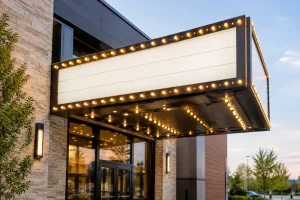
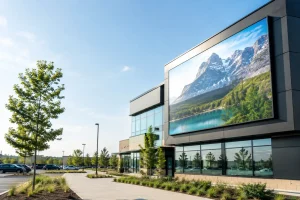
This is where custom design earns its value. Rather than forcing a logo into a standard format, the design should account for your building, site conditions, customer traffic patterns, and local requirements. Sometimes a clean illuminated channel-letter sign is the right fit. In other cases, a cabinet sign, monument sign, digital display, dimensional lettering, window graphics, or a coordinated wayfinding system will do more for the property.
There are trade-offs. Larger signs can improve visibility but may require more extensive permitting, structural support, or landlord approval. Digital displays offer flexible messaging but require appropriate location, controls, electrical capacity, and maintenance. Non-illuminated signs may have a lower upfront cost, but businesses with evening traffic may lose valuable visibility. The right choice depends on the site and the role the sign needs to play.
Consider the Site Before Finalizing the Sign
A site visit can prevent expensive surprises. Existing electrical service may be insufficient for a new illuminated sign. A building facade may need reinforcement. A pylon or monument sign may require excavation, foundation work, or coordination with utilities. Trees, neighboring buildings, road direction, and parking layouts can all change the best placement.
For leased locations, the process may also include landlord criteria, shopping center sign standards, and tenant coordination. For new construction or major renovations, sign planning should happen early enough to coordinate conduit, circuits, mounting points, and finish details. Waiting until the building is nearly complete can limit options and add avoidable cost.
Permitting and Engineering Are Part of the Work
Sign permits are not just paperwork. They are a check on public safety, structural requirements, electrical connections, zoning limits, and placement rules. Requirements can vary by city, property type, sign type, and whether the project is new construction, replacement, or a change to an existing sign.
A permit package may require drawings, site plans, electrical details, structural information, landlord authorization, and other documentation. If a sign needs engineering, that work should be completed before fabrication and installation are scheduled. Skipping this step can lead to delays, redesigns, failed inspections, or a sign that must be modified after it is already built.
For property managers, this coordination is especially valuable. A tenant may be focused on opening day, while the property owner needs to protect the building, meet local requirements, and maintain a consistent appearance across the site. A full-service contractor can manage the details and keep communication moving among the business, landlord, municipality, and installation crew.
Rudnick Enterprises approaches signage with that full-project perspective, including consultation, design, engineering coordination, fabrication, permitting, installation, and service. Working with one accountable team reduces the handoffs that often create missed details and schedule headaches.
Installation Is Where Planning Meets Reality
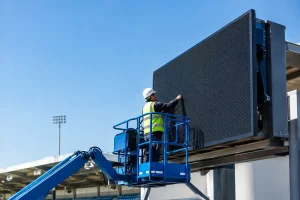
A sign installation may involve more than mounting a finished piece to a wall. Crews may need to access high elevations, work around active customer traffic, connect electrical components, set foundations, patch previous mounting locations, or remove outdated signage safely. The work needs to protect the property as well as the people around it.
Licensed, insured installation matters because signs are exposed to weather, vibration, temperature changes, and years of use. Hardware, mounting surfaces, wiring, drainage, and sealing all affect durability. A sign that looks finished on installation day should also be positioned and secured to withstand the conditions it will face over time.
Electrical coordination is particularly important for illuminated signs, digital displays, and parking lot or exterior lighting tied to a larger project. When signage and electrical work are handled separately, each vendor may assume the other is responsible for a circuit, connection, timer, or troubleshooting issue. A contractor that understands both sides can identify needs earlier and provide a clearer path to completion.
Plan for Service Before Something Fails
Commercial signs work long hours, often in the weather and after dark. Lighting components age, power supplies can fail, faces can be damaged, and storms or vehicle impacts can create urgent issues. Regular attention helps keep small problems from becoming a poor first impression for customers.
Service can include lighting repairs, electrical troubleshooting, sign face replacement, cabinet repairs, structural checks, digital display support, and removal of outdated signs. For a property with several tenants, scheduled inspections and responsive repair service can help maintain a professional appearance without forcing the manager to chase multiple vendors.
It is also worth considering sign removal as part of a relocation, renovation, or tenant turnover plan. Old signage can leave visible holes, exposed wiring, or a dated look that affects the next occupant. Proper removal and repair help prepare the property for what comes next.
Choose a Partner Who Can Own the Details
A commercial sign project rarely fits neatly into one category. It may involve branding, construction, zoning, electrical infrastructure, access equipment, and ongoing maintenance. The lowest initial quote is not always the lowest total cost if it leaves permitting, electrical work, repairs, or coordination for someone else to manage.
Ask practical questions before choosing a contractor. Who will assess the site? Who handles permit coordination? Is electrical work included when needed? How will the sign be serviced after installation? Can the team manage both a small storefront update and a larger multi-location or multi-tenant project? Clear answers are a strong sign that the contractor understands the real scope of the work.
Your sign should make it easier for people to do business with you. When it is designed for the site, built for the conditions, installed correctly, and kept in working order, it becomes a dependable part of your operation rather than another item on your maintenance list.