



A sign can be perfectly designed and installed, then lose its impact one rainy season at a time. Dirt dulls colors, failed lighting makes a location harder to find, and small cracks can turn into costly repairs when moisture gets behind a sign face. Knowing how to maintain outdoor signage helps protect the investment your business has made in visibility, customer experience, and property appearance.
For businesses and commercial properties in Louisville and Southern Indiana, outdoor signs work through heat, humidity, wind, road dust, pollen, freezing temperatures, and occasional severe weather. A practical maintenance plan keeps problems from becoming emergencies while helping your property look open, professional, and cared for.
Start With a Routine Sign Inspection
The most valuable sign maintenance happens before there is an obvious failure. Walk the property regularly and look at your signs from the same distance your customers do. A property manager may notice a dark letter or a loose panel up close, but a driver entering a shopping center sees whether the monument sign is readable and whether tenant names are easy to find.
Monthly visual checks are a sensible starting point for many storefront, freestanding, directional, and illuminated signs. High-traffic sites, restaurants with extended hours, and properties that rely heavily on evening visibility may benefit from more frequent checks. Inspect signs once in daylight and once after dark when possible. Daylight reveals dirt, fading, damage, and structural concerns. Nighttime inspections reveal lighting outages, uneven illumination, flickering, and display issues.
During a walkthrough, check for these common warning signs:
- Faded graphics, peeling vinyl, stains, or discoloration on sign faces
- Cracked panels, missing trim, loose fasteners, or gaps around cabinets and letters
- Water streaks, condensation, corrosion, insect buildup, or debris inside visible sign areas
- Dim, flickering, or unlit letters and sections of an illuminated sign
- Leaning posts, shifting bases, damaged landscaping, or vehicles that may have struck the sign
Take photos and note the date, location, and concern. This simple record helps identify repeated issues and gives a service professional useful information before arriving on site.
Clean Outdoor Signage Without Damaging It
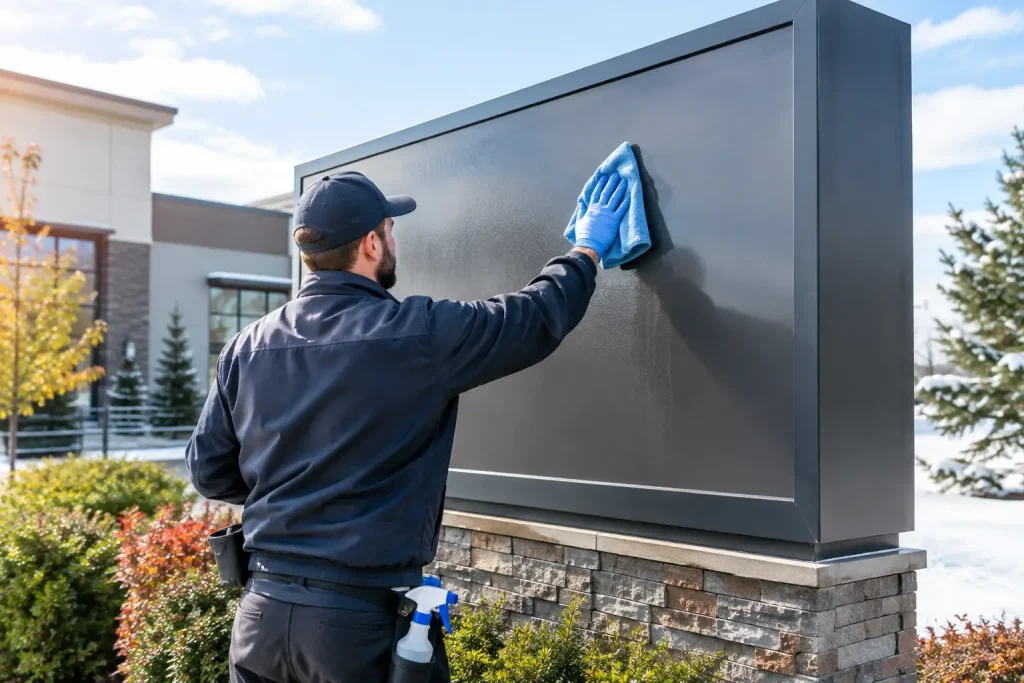
Cleaning is one of the easiest ways to maintain outdoor signage, but the wrong tools can scratch acrylic, haze clear panels, lift graphics, or damage finishes. Use a soft microfiber cloth or nonabrasive sponge with mild soap and clean water for most routine cleaning. Rinse thoroughly so soap residue does not leave streaks, especially on dark backgrounds and glossy surfaces.
Avoid abrasive pads, strong solvents, harsh degreasers, and high-pressure washing directly against seams, electrical components, vinyl edges, or aging caulk. A pressure washer may seem efficient for a large monument sign or building facade, but it can force water into areas that should stay dry. The safer approach depends on the sign material, its age, and its condition.
For channel letters, cabinet signs, dimensional lettering, and signs with routed panels, pay attention to edges and crevices where pollen, leaves, spiderwebs, and grime collect. Clearing buildup improves appearance and can also reduce moisture retention. Do not open an illuminated sign cabinet or remove electrical covers for cleaning unless you are qualified to do so. What looks like a simple cleaning job can expose energized wiring or compromise a weather seal.
Restaurants, gas stations, medical offices, and businesses near busy roads may need cleaning more often than an office park sign set back from traffic. There is no single schedule that fits every property. The right frequency is based on exposure, sign materials, surrounding trees, road conditions, and how central the sign is to daily customer traffic.
Check Lighting and Electrical Components Early
A partially dark sign sends the wrong message, even when the business is open and operating normally. Lighting failures can come from aging components, water intrusion, loose connections, damaged wiring, timer problems, or electrical supply issues. Replacing a visible light source may solve the problem, but repeated outages should be investigated rather than treated as a series of isolated repairs.
Watch for uneven brightness, delayed startup, flickering, buzzing, tripped breakers, or signs that shut off at unexpected times. If a sign is connected to a photocell or timer, verify that it turns on and off as intended through changing daylight hours. Digital displays also need regular checks for brightness settings, content scheduling, pixel issues, ventilation, and weather-related performance.
Never assume a sign issue is only cosmetic. Water inside an electrical sign, exposed conductors, scorch marks, or recurring breaker trips require prompt professional attention. A licensed and insured contractor can assess both the sign and the electrical infrastructure supporting it, which matters when the root cause is hidden behind a wall, within a raceway, or at the service connection.
Protect the Structure, Foundation, and Weather Seals
Outdoor signage is a construction element as well as a branding element. Freestanding signs, pylon signs, pole signs, monument signs, and larger wall signs all depend on secure mounting, sound supports, and properly sealed penetrations. Wind, settling, temperature changes, and minor vehicle impacts can affect those components over time.
Look for rust, loose anchors, cracked masonry, deteriorated caulk, separation around mounting points, and pooled water near a sign base. On monument signs, inspect landscaping as well. Overgrown shrubs can hide tenant panels or directional information, while irrigation aimed at the sign can contribute to staining and moisture problems.
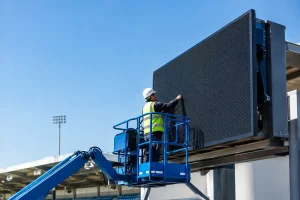
After a major storm, check for displaced panels, branches, impact damage, water entry, and shifting supports. Do not climb ladders or attempt to stabilize a damaged elevated sign yourself. Restrict access around an unsafe sign and arrange a professional inspection. Fast action can protect visitors and prevent a repairable condition from becoming a full replacement.
Keep Graphics, Faces, and Tenant Information Current
Maintenance is not limited to fixing broken parts. A sign that is physically sound but has outdated tenant names, faded branding, old hours, or confusing wayfinding still creates a poor experience. This is particularly relevant for multi-tenant retail centers, medical offices, apartment communities, and hospitality properties where visitors need clear directions.
Review sign content whenever a tenant changes, a business rebrands, operating hours shift, or a property is renovated. Temporary patches and mismatched panels may work for a short period, but they often make a property appear disorganized. Planning updates as part of regular maintenance allows for a consistent finish, correct sizing, and proper permit review where required.
Fading also deserves attention. Sun exposure affects colors differently depending on the material, orientation, ink, film, and location. A south-facing sign may require graphic replacement sooner than one that receives limited direct sun. Replacing a worn face or graphic before it becomes difficult to read is usually better for the brand and easier to schedule than waiting for it to fail completely.
Build a Maintenance Schedule Around Your Property
A good maintenance program should match the sign system and the property’s operating needs. A single small storefront sign does not need the same service approach as a shopping center with a monument sign, multiple tenant panels, parking lot lighting, building-mounted signs, and directional graphics.
For many commercial properties, a monthly visual inspection, quarterly cleaning and operational check, and annual professional service review create a strong baseline. Seasonal reviews are especially useful before winter and after storm-heavy periods. If your sign is older, highly illuminated, exposed to heavy traffic, or essential for after-dark business, more frequent service may be worthwhile.
Keep maintenance records with installation documents, electrical details, permits, product information, photos, and repair history. This makes future troubleshooting faster and helps property owners budget for component replacement rather than reacting only after an outage. It also creates useful documentation when a tenant, insurer, or local authority needs information about the sign.
Know When to Call for Professional Sign Service
Basic visual checks and careful cleaning can be handled as part of property upkeep. Electrical repairs, elevated access, structural damage, water intrusion, major graphic replacement, and changes to a sign’s size or location should be handled by qualified professionals. These projects may involve permitting, code requirements, engineered mounting, electrical troubleshooting, or coordination with other building work.
Working with one team that can manage signage and electrical needs reduces the back-and-forth between separate vendors. Rudnick Enterprises helps businesses and property managers address sign maintenance with the same attention to safety, appearance, permitting, and dependable operation that goes into a new installation.
Your exterior sign is often the first instruction a customer receives: this is where we are, this is who we are, and we are ready for your business. Give it regular attention, and it can keep delivering that message clearly through every season.