




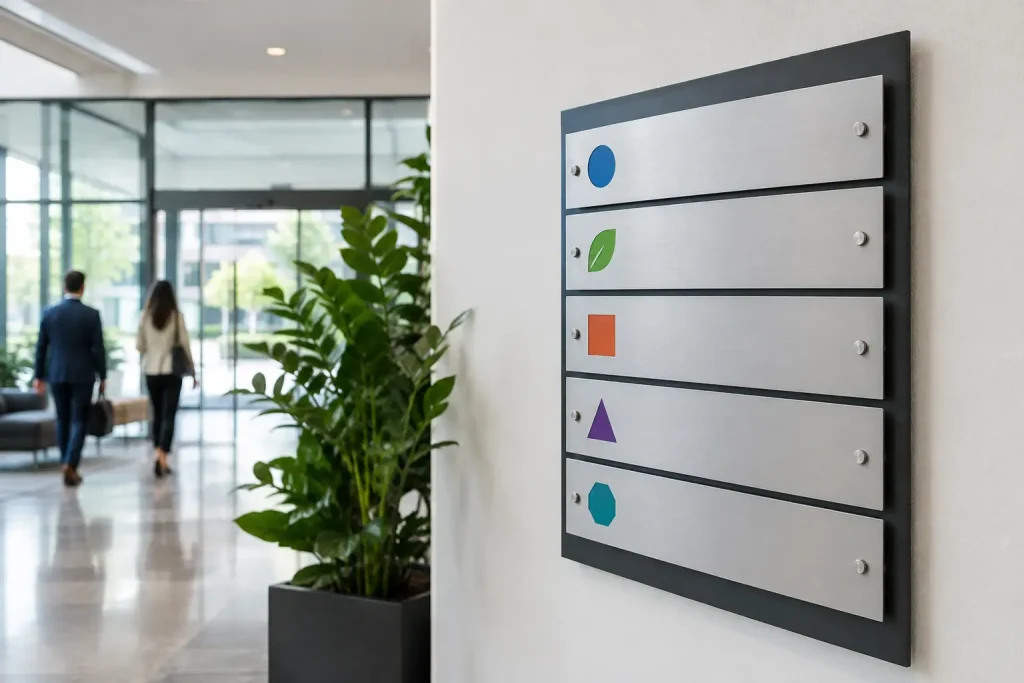
A visitor has already reached your property. They have parked, walked to the entrance, and are now looking for one answer: where do I go? Multi tenant directory signs make that next step clear. When they are well planned, they reduce confusion, help tenants make a professional first impression, and give a shopping center, office building, medical complex, or mixed-use property a more organized appearance.
For property owners and managers, a directory is not simply a panel with names. It is a working piece of the property. It needs to stay readable from the right distance, hold up to local weather, accommodate turnover, fit the building and site, and meet applicable sign rules. Getting those details right early can prevent a costly replacement or a directory that becomes difficult to maintain.
What Multi Tenant Directory Signs Need to Do
The right directory depends on how people move through the property. An office building with a main lobby may need an interior tenant board near reception and directional signs at elevator banks. A retail center may need a freestanding monument directory visible from the drive aisle, plus building or suite identification closer to each storefront. Medical offices often benefit from a clear exterior directory and interior wayfinding that guides patients to the right floor, department, or provider.
The common goal is simple: visitors should not have to guess. Tenant names, suite numbers, arrows, building identifiers, and property branding should work together in a logical order. A directory that looks attractive but does not answer the visitor’s immediate question is not doing its job.
Good planning also supports leasing. Prospective tenants notice whether a property feels cared for, easy to navigate, and professionally managed. A clean directory system shows that the owner has thought through the customer experience. It also gives current tenants a dependable place to display their name and location without creating an inconsistent collection of individual signs.
Start With Traffic, Not Just Available Space
A common mistake is choosing the directory location based only on where there is open wall area or room near the entrance. Start instead with the approach route. Where do drivers enter? Where do pedestrians naturally look? Is there a decision point where visitors must choose a building, parking area, floor, or corridor?
For exterior signs, viewing distance and vehicle speed matter. A directory at a busy entrance needs lettering large enough to read before drivers pass it. A sign serving slow-moving traffic within a parking lot can carry more detail. If the sign is too close to the road, too low, blocked by landscaping, or positioned after the turn visitors need to make, even an attractive design can create frustration.
Inside, place directories where people pause naturally: a lobby entrance, reception area, elevator landing, or main hallway junction. Avoid placing the sign behind furniture, glass reflections, or a door swing. Lighting is part of the decision as well. A dimly lit directory is no more useful than one hidden from view.
Design for Readability First
Property branding matters, but readable information should lead the design. The tenant name and suite number are usually the highest-priority details. Use a clear typeface, strong contrast, and adequate spacing between listings. Crowding too many names onto a panel can make each listing difficult to read and create a messy appearance from a distance.
Color can reinforce the property identity, but it should not reduce contrast. Light lettering on a light background or dark lettering on a dark background may look subtle in a design proof and become difficult to read in actual conditions. Exterior panels also need to perform in direct sun, shade, rain, and at night.
Illumination may be the right choice for a directory that serves evening businesses, healthcare facilities, restaurants, or high-traffic retail. It adds visibility, but it also introduces electrical planning, maintenance needs, and local code considerations. Non-illuminated signs can be a practical choice for sheltered interiors or properties with daytime-only traffic. The best option depends on operating hours, site conditions, budget, and the experience you want visitors to have.
Give Each Tenant a Consistent Presence
A multi-tenant property should not force every business into the same branding style, but the directory itself should maintain a consistent system. Standardized tenant panels, aligned logo areas, and matching lettering sizes make updates easier while preserving a polished look.
Some properties use tenant logos. Others use names only to keep the directory clean and allow more listings. Logos can improve recognition, especially in retail settings, but they require careful size standards. Without those standards, a large logo can overpower neighboring tenants and make the full sign look unbalanced.
Plan for Turnover Before It Happens
Tenant changes are part of commercial property ownership. A directory designed as a permanent, one-piece graphic may look good on day one but become expensive or awkward to update. Modular tenant panels, replaceable inserts, routed nameplates, or digitally printed sections can make changes more manageable.
There is a trade-off. Highly flexible systems may have visible seams or limits on logo treatments, while fully custom panels can create a more refined appearance but require more involved updates. The right approach comes down to expected turnover, the property’s image, and how quickly you need changes completed.
It is also wise to reserve space for future occupants. Filling every available line may seem efficient, but an overpacked directory leaves no room for growth and can force a redesign sooner than necessary. For larger properties, separate directories by building, floor, or tenant category rather than creating one oversized sign with too much information.
Permits, Codes, and Installation Details Matter
Directory signs often fall under local sign ordinances, zoning requirements, and building rules. Height, overall square footage, illumination, placement, and distance from property lines can all affect what is allowed. In Louisville and Southern Indiana communities, requirements can vary by jurisdiction and property type.
That is why sign planning should include permitting review before fabrication. A directory may also require electrical work, structural supports, footings, or coordination with existing landscaping and utilities. A freestanding monument sign, for example, needs more than a good-looking cabinet. It needs a stable foundation, proper access for service, and installation that accounts for site conditions.
For illuminated directories, a qualified team should evaluate the power source, wiring path, disconnect requirements, and service access. Addressing these items during design is typically easier than trying to solve them after the sign has been built. Rudnick Enterprises coordinates design, fabrication, permitting, sign installation, and electrical needs so property teams are not left managing separate vendors for one project.
Keep the System Looking Managed
A directory earns its value over time, not just when it is installed. Faded graphics, burned-out lighting, missing tenant panels, water intrusion, and outdated listings send a message that the property is not being actively maintained. Small problems are easier and less expensive to address before they affect the full sign.
Set a simple inspection routine. Check that all tenant names are current, panels are secure, illumination is operating, and landscaping has not grown into the sign face. After severe weather, inspect freestanding signs for damage or shifting. If a tenant moves, schedule the directory update as part of the turnover checklist rather than allowing a blank space or old name to linger.
A well-built sign system can serve a property for years, but every system needs occasional attention. Materials, finishes, and lighting should be selected with local weather exposure and serviceability in mind. The least expensive option at installation is not always the lowest-cost choice over the life of the sign.
Choose a Partner Who Sees the Whole Property
Directory signage touches branding, traffic flow, construction, electrical work, permits, and ongoing maintenance. Treating it as a quick print job can leave gaps that show up later as poor visibility, delayed approvals, difficult updates, or unexpected installation costs.
The most useful directory sign is one that feels effortless to the visitor because the work behind it was carefully planned. When tenants are easy to find and the property looks orderly from the first turn into the lot, your signage is doing more than listing names – it is helping every business on site start the conversation on the right foot.