




A dining room that suddenly looks darker, a retail display that loses its pop, or office lights that fade when the HVAC starts are more than small annoyances. When lights dim, your electrical system may be reacting to a temporary demand – or warning you that a component needs professional attention.
For business owners and property managers, the right response depends on the pattern. One aging fixture is usually a contained maintenance issue. Dimming across several areas, especially when equipment starts up, deserves a closer look. Catching the difference early can help protect your equipment, keep your space safe, and maintain the polished appearance customers expect.
Why Lights Dim in Commercial Buildings
Lights need a steady supply of voltage to perform as intended. A brief dip in available voltage can make lamps or LED drivers appear to fade, flicker, or pulse. Sometimes the cause is outside the building. Other times, it is within a branch circuit, panel, connection, fixture, or electrical service.
The timing of the dimming provides useful clues. If lights dim only when a large motor starts, the electrical demand may be pulling down voltage briefly. If they stay dim or fluctuate at random, the issue may involve a loose connection, overloaded circuit, failing equipment, or a supply problem that should not be ignored.
Older properties, remodeled spaces, and multi-tenant buildings can present added complications. Electrical loads often change over the years as restaurants add kitchen equipment, retailers install display lighting, offices add technology, or tenants reconfigure their space. An electrical system that once had adequate capacity may need updates to serve the building safely and reliably.
When Lights Dim After Equipment Starts
A momentary dip when a large piece of equipment turns on is common enough to be familiar, but it should not automatically be dismissed as normal. Air-conditioning units, refrigeration equipment, compressors, elevators, pumps, kitchen equipment, and other motor-driven loads draw extra current as they start. If the circuit or service is undersized, heavily loaded, or has a connection problem, nearby lights may dim noticeably.
A slight, quick change may be acceptable in some situations. Repeated or dramatic dimming is different. If customers can see the lighting change from across the room, or if computers, point-of-sale equipment, digital displays, or other electronics reset at the same time, schedule an electrical evaluation.
The solution is not always a major upgrade. An electrician may find that a dedicated circuit, corrected connection, load redistribution, equipment repair, or panel improvement addresses the problem. The goal is to identify the actual source instead of treating the symptom with replacement bulbs or temporary workarounds.
A loose connection can create bigger risks
Loose wiring connections at a fixture, switch, outlet, junction box, panel, meter base, or service component can interfere with consistent power. They can also generate heat. That makes intermittent dimming especially worth investigating when it occurs with buzzing, crackling, a burning odor, warm electrical covers, or visible discoloration.
Do not remove panel covers or attempt to tighten wiring in commercial electrical equipment yourself. Turn off affected equipment if it can be done safely, keep people away from anything that appears damaged, and call a licensed electrician. A service call is far less disruptive than a failure that takes down a critical circuit or creates a safety hazard.
Is the Problem One Fixture or the Whole Property?
The simplest first step is to observe the scope of the issue. A single dim fixture may have a failing lamp, driver, ballast, socket, dimmer, or control. This is common with older fixtures and can often be handled as a focused lighting repair.
If several fixtures on the same circuit dim together, the problem may be in that circuit or at the panel serving it. When lights dim in multiple parts of the building, including areas on different circuits, the concern moves closer to the main electrical service or the utility supply. In multi-tenant properties, it also helps to find out whether neighboring suites are experiencing the same issue.
Property managers should document what happens before making the call. Note the time, the affected rooms, whether the issue is brief or ongoing, and what equipment was running. Photos or short video can be helpful when the behavior is intermittent. This information helps an electrician troubleshoot efficiently and reduces guesswork.
Warning Signs That Need Prompt Electrical Service
Dimming lights alone may not indicate an emergency, but certain combinations call for prompt professional attention. Watch for these signs:
- Lights that dim and brighten repeatedly without an obvious trigger
- Breakers that trip, fuses that blow, or outlets and switches that stop working
- Buzzing from panels, fixtures, switches, or electrical equipment
- Burning smells, smoke, sparks, scorch marks, or unusually warm covers
- Electronics that shut down, restart, or show power-related errors
- Dimming that affects much of the building or appears after storm damage
If there is smoke, sparking, a fire, or immediate danger, call emergency services first. For electrical conditions that are concerning but not life-threatening, arrange qualified electrical service as soon as possible. Avoid repeatedly resetting a breaker without determining why it tripped. That can hide an overloaded or damaged circuit rather than solve it.
LED Lighting Can Make Electrical Issues More Noticeable
LED retrofits reduce energy use and maintenance needs, but they can reveal problems that older lighting masked. LEDs respond quickly to voltage fluctuations, and incompatible dimmers, drivers, controls, or sensors can cause visible flickering or uneven output.
That does not mean the building wiring is always at fault. A fixture-specific issue may be caused by a mismatched driver or control component. However, replacing fixtures without evaluating the circuit can lead to repeat service calls if the real issue is poor voltage quality, loose wiring, or a load problem upstream.
A proper assessment considers the lighting equipment and the electrical infrastructure together. That approach is particularly helpful for retail storefronts, restaurants, offices, medical facilities, and common areas where lighting affects safety, customer perception, and day-to-day operations.
How to Prevent Repeat Dimming Problems
Preventive maintenance is usually less disruptive than responding after a failure. For commercial properties, that means keeping electrical panels accessible and clearly labeled, addressing nuisance breaker trips, replacing damaged devices and fixtures, and having new equipment evaluated before it is added to an already busy circuit.
During renovations or tenant build-outs, electrical planning should happen alongside lighting, signage, and layout decisions. A new illuminated building sign, digital display, kitchen appliance, or bank of exterior lighting may require more than a nearby outlet. The work may involve dedicated circuits, load calculations, permits, controls, or service upgrades. Coordinating these details before installation helps avoid dimming issues and expensive changes later.
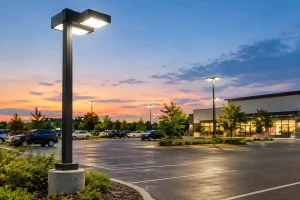
Outdoor lighting deserves attention as well. Failing photocells, corroded connections, water intrusion, damaged conduit, and aging fixtures can cause inconsistent operation. Because exterior lighting supports visibility and security after hours, it should be repaired before a minor performance issue becomes a dark parking area, unlit entrance, or unreliable sign.
A Clear Path From Troubleshooting to Repair
Electrical troubleshooting should give you an answer, not just a quick reset. A qualified contractor can inspect the affected fixtures and circuits, test voltage, evaluate panels and connections, review equipment loads, and determine whether the issue is internal or utility-related. From there, the repair plan can match the actual condition of the property.
Rudnick Enterprises helps Kentucky and Southern Indiana businesses manage lighting and electrical concerns without forcing them to coordinate separate providers. Whether the issue is one failing fixture, a circuit that cannot keep up with demand, or lighting tied to a larger signage or remodel project, the work can be handled with permitting, code considerations, and long-term reliability in mind.
If your lights have dimmed once, pay attention to what was happening in the building at that moment. If they dim again, especially alongside noise, heat, breaker trips, or equipment problems, treat that pattern as useful information and have it checked before it interrupts your operation.