



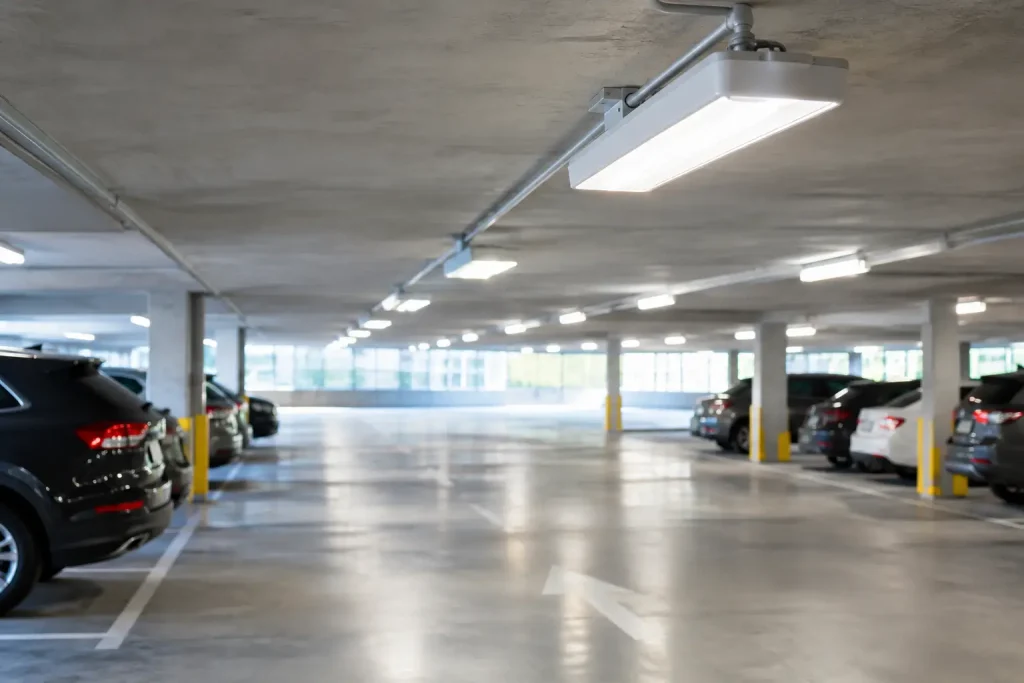
A parking garage can have a clean structure, clear striping, and good security systems, yet still feel unsafe if the lighting leaves dark corners, harsh glare, or uneven patches between fixtures. The best lighting for parking garages does more than brighten the space. It helps drivers see pedestrians, makes people feel more comfortable walking to their cars, supports security cameras, and gives property owners a system that is practical to maintain.
For owners and managers in Louisville and Southern Indiana, the right answer is rarely just replacing old fixtures with brighter ones. Garage lighting needs to fit the structure, traffic patterns, electrical capacity, local requirements, and the way the property is used after business hours.
What Makes the Best Lighting for Parking Garages?
The strongest parking garage lighting plan balances visibility, uniformity, energy use, and durability. A fixture with a high lumen output may look impressive on paper, but it can create glare or leave shadows if it is installed in the wrong location. Conversely, too few fixtures can make ramps, stairwell entrances, payment areas, and pedestrian routes feel poorly maintained or unsafe.
LED fixtures are generally the preferred choice for new installations and retrofits. They use less energy than many older lighting technologies, turn on immediately in cold weather, and can provide a long service life. More importantly, quality LED fixtures give property managers greater control over light distribution, color temperature, dimming, and occupancy-based operation.
That said, not every LED fixture is suited for every garage. Open-sided parking decks face rain, wind, humidity, dust, and temperature swings. Enclosed garages may have lower ceilings, reflective concrete surfaces, and ventilation equipment that affects fixture placement. A professional lighting layout accounts for those conditions before equipment is selected.
Start With Light Levels, Not Fixture Count
A common mistake is choosing a fixture count based on what was already installed. Older systems were often designed around the limitations of the equipment available at the time, not current operating costs or modern visibility expectations.
Instead, begin with the areas people need to see and the tasks they perform there. Drive lanes need enough light for drivers to identify turns, curbs, other vehicles, and pedestrians. Parking stalls need reasonably even coverage so customers can locate their vehicles and feel comfortable loading items or walking with children. Ramps, entrances, exits, pay stations, elevator lobbies, stairwells, and accessible routes deserve special attention because people transition between moving vehicles and foot traffic in those areas.
Uniformity matters as much as brightness. When a driver moves from a very bright area into a dark section of a garage, the eye needs time to adjust. Those abrupt changes can make obstacles harder to see. A well-designed plan reduces severe bright-to-dark transitions and limits shadows around structural columns.
Photometric planning is the practical tool for this job. It models how light will land on the garage floor and vertical surfaces before installation begins. Rather than guessing, the property owner can review predicted light levels, identify weak areas, and make adjustments while the project is still on paper.
Consider Vertical Light for Faces and Cameras
Floor-level brightness is only part of the picture. Security cameras and people using the garage benefit from vertical illumination, or light that reaches faces, signage, doorways, and walls. Good vertical light helps a visitor recognize another person near an elevator lobby or stairwell without creating a glaring fixture directly in their line of sight.
This is especially helpful near garage entrances where daylight creates challenging contrast. Fixtures may need to be positioned or specified differently at transition zones so drivers are not entering what appears to be a dark tunnel during the day.
Choose Fixtures Built for the Garage Environment
Parking garage fixtures must handle more abuse than lights in a typical office corridor. They are exposed to vibration, vehicle exhaust, moisture, airborne debris, and occasional impact. The housing, lens, mounting method, and electrical connections all matter.
For open decks and exposed areas, use fixtures with an appropriate wet-location rating and corrosion-resistant construction. In covered but humid garages, damp-location-rated equipment may be suitable depending on the specific conditions. Fixtures installed where they could be struck by vehicles, carts, or maintenance equipment should also be mounted high enough or protected appropriately.
A practical specification review should look beyond wattage and lumen output. Consider these five details before making a final choice:
- Light distribution, so the fixture throws light where vehicles and pedestrians need it rather than wasting it on ceilings or exterior walls.
- Color temperature, often in a neutral range that looks clear and welcoming without feeling overly blue or harsh.
- Color rendering, which helps drivers distinguish painted markings, vehicle colors, clothing, and signs.
- Rated life and warranty terms, including what labor and replacement costs may look like if a driver or fixture fails early.
- Surge protection, particularly in facilities with electrical events, outdoor exposure, or older electrical infrastructure.
The least expensive fixture can become the most costly option if it produces uneven light, fails prematurely, or requires frequent access equipment for replacement. A garage is not the place to select equipment on purchase price alone.
Use Controls Without Creating Safety Gaps
Lighting controls can reduce operating costs, but they need to be designed around real traffic patterns. A garage that is busy from early morning through late evening may need different control settings than a residential deck with predictable overnight activity.
Occupancy sensors work well in low-use areas such as upper levels, remote stairwell approaches, storage areas, or certain pedestrian corridors. The key is maintaining a safe background level of light. When a sensor detects movement, lighting can increase to full output, but the area should not drop so low between occupants that it appears vacant or unsafe.
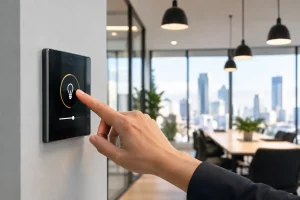
Daylight harvesting can also help near open sides of a garage. Fixtures close to large openings may dim when daylight is sufficient, while interior fixtures remain at their required output. Timers and centralized controls can simplify scheduling, monitoring, and after-hours adjustments for larger properties.
Controls should never make users work to see. Test sensor response times, dimming levels, and override settings after installation. A system that saves energy but leaves a delivery driver or late-shift employee standing in a dim stairwell is not done right.
Address Glare, Shadows, and Color Carefully
More light is not always better light. High-output fixtures mounted without regard for viewing angles can produce glare that distracts drivers and makes it harder to see beyond the fixture. Poorly shielded light near ramps and garage exits can be particularly uncomfortable when drivers are already adjusting to changing daylight conditions.
Optics, mounting height, fixture spacing, and shielding all affect glare. Light should be directed down and across the task area with enough overlap to avoid dark pockets, but not so much overlap that the space becomes excessively bright. Concrete ceilings and walls can also reflect light, which may improve overall brightness but can worsen glare when fixture selection is not carefully matched to the structure.
Color temperature is another area where preference should be balanced with function. Many garages perform well with a neutral white appearance because it supports visibility and makes the space feel cleaner. Extremely cool light can look stark, while very warm light may reduce the crisp visual contrast needed for markings and wayfinding. The best choice depends on the garage design, surrounding property lighting, and the experience the owner wants customers or tenants to have.
Plan for Codes, Emergency Lighting, and Electrical Capacity
Parking garage lighting projects involve more than fixture replacement. Electrical circuits may need upgrades, old wiring may require attention, and emergency lighting must operate correctly when normal power is lost. Exit paths, stairwells, accessible routes, and designated emergency equipment all have their own requirements.
Local permitting and code requirements can vary by project scope and jurisdiction. For commercial property owners, it is wise to address those details early rather than finding out after equipment has been ordered or installation has started. An experienced licensed contractor can evaluate existing circuits, identify whether new controls affect code compliance, coordinate permitting when required, and make sure the installation supports the property’s overall electrical system.
This is also the right time to consider related work. Clear wayfinding signs, illuminated directional signs, updated exit signage, and electrical repairs can often be coordinated with a lighting project. Handling the work together can reduce repeat mobilization and keep the garage looking consistent when the project is complete.
Make Maintenance Part of the Design
Even high-quality LED lighting needs a maintenance plan. Dirt, moisture, impact damage, failed drivers, and electrical issues can affect performance over time. If a fixture is difficult to access, a small repair can require lifts, traffic control, and coordination with tenants or customers.
Specify equipment that can be serviced reasonably, keep records of fixture models and installation locations, and inspect the garage regularly for dark areas or damaged lenses. Staff should also have a simple way to report outages. A single failed fixture near an elevator or stairwell can change how safe the entire garage feels.
Rudnick Enterprises helps commercial property owners coordinate lighting, electrical work, permitting details, and related signage needs with one accountable local team. The goal is not simply to install new fixtures, but to leave the garage safer, more efficient, and easier to manage.
A well-lit garage tells visitors that the property is cared for before they ever reach the building. When the layout, fixtures, controls, and electrical work are planned together, the lighting continues to do its job long after the installation crew has left.