



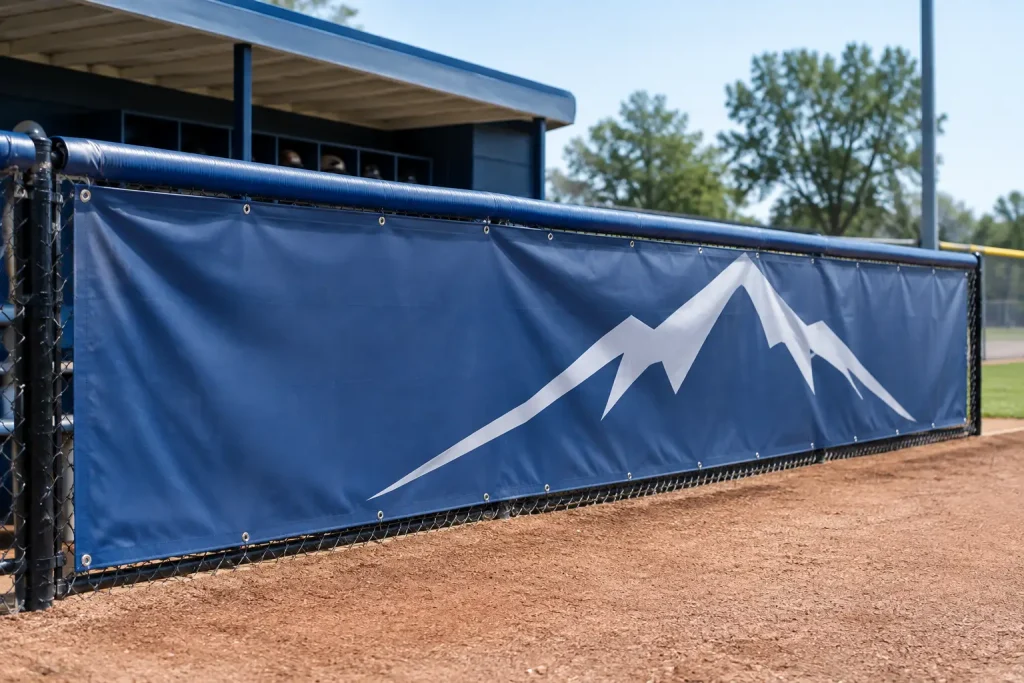
A dugout banner has a short window to do its job. Fans see it from the stands, players see it at field level, and sponsors expect it to represent their name well in every photo, livestream, and championship run. Dugout banner fabrication is not simply a matter of printing a logo on material. The banner has to fit the structure, stay readable at a distance, handle wind and weather, and remain securely mounted through a demanding season.
For schools, parks departments, youth leagues, colleges, and facility operators, a well-made dugout banner helps turn a functional team space into a polished part of the ballpark. The right fabrication decisions also reduce the common headaches of sagging graphics, torn corners, faded color, and last-minute replacement needs.
What Dugout Banners Need to Handle
A dugout is a high-use environment. Players lean against railings, equipment moves in and out, balls hit fencing, and weather changes quickly. A banner may be exposed to strong sun, rain, wind, dust, and repeated contact throughout the year. Fabrication should account for those conditions before production begins.
Material selection is one of the first decisions. Vinyl is often a practical choice for solid, vivid graphics and sponsor recognition. Mesh material can be a better fit when wind passes directly through the fencing or when the banner covers a long section of open chain link. The small openings in mesh reduce wind load, which can help protect both the banner and the attachment points.
Neither option is automatically right for every field. A solid banner can provide stronger color and greater visual impact, but it may need more careful mounting in a wind-prone location. Mesh may be more forgiving on exposed fencing, though fine lettering and detailed artwork need to be designed with the material in mind. A site review helps determine which trade-off makes sense.
The finished edges matter as much as the face of the banner. Hemmed edges add strength, while properly spaced grommets help distribute the pull of ties or fasteners. Reinforced corners are especially valuable on banners that will be tensioned across wide openings. These details may not be the first thing a spectator notices, but they often determine whether the installation stays neat after months of use.
Design for the Bleachers, Not the Dugout Bench
A logo can look excellent on a computer screen and still disappear from the opposite side of a field. Effective banner design begins with viewing distance. Team names, mascot marks, school colors, sponsor identities, and directional information all need enough contrast and scale to be understood quickly.
For most dugout applications, simple layouts work best. A primary logo, a short message, and clear contact or sponsor information are generally more effective than a crowded arrangement of small text. This is particularly true when the banner will be seen through fencing, from elevated seating, or on video.
Color choices deserve practical attention. High-contrast combinations remain easier to read under changing daylight. Dark lettering on a dark background may appear sharp in a proof but can lose impact in shade or during an evening game. Similarly, light colors can wash out against bright sky or pale fence fabric. A fabrication team should review the artwork at its intended production size, not just approve a small digital mockup.
Sponsors may require their established logo colors and fonts, while a school or league may have brand standards of its own. Those needs can be accommodated without making the overall banner feel cluttered. The key is assigning visual priority early. Is the banner primarily for team pride, recognition of a donor, facility naming, or promotion of a local business? The answer should guide the layout.
Plan Banner Sections as a Complete System
Many facilities add banners one at a time as sponsorships are sold. That approach can work, but it can also leave a dugout with mismatched sizes, uneven spacing, and inconsistent installation methods. Planning the full fence line first creates a more professional result, even when production happens in phases.
Establish standard panel dimensions, logo placement areas, color treatment, and mounting locations. Then future sponsor banners can be added without disrupting the visual rhythm of the existing display. This is useful for multi-field complexes, where consistent graphics help visitors identify the organization and navigate the property.
Fabrication Details That Prevent Early Failure
The most attractive banner still needs to be built for the way it will be used. Correct measurements are essential. Fabricators should measure the actual mounting area, account for posts and gates, and confirm whether a banner needs clearance for hinges, latches, padding, or team entrances. Measuring only the fence length can lead to a banner that bunches, blocks access, or leaves an awkward gap.
Print quality and protective finishing also influence longevity. Outdoor-rated inks and appropriate finishing methods help graphics keep their color through sun exposure. The expected lifespan depends on the material, orientation, local weather, maintenance practices, and whether the banner remains installed year-round. A seasonal banner can be handled differently than a permanent sponsor display.
Mounting hardware should match the fence and the banner’s exposure. Zip ties are common for short-term or lighter applications, but they should be installed evenly and checked periodically. More demanding conditions may call for stronger attachment methods or additional reinforcement. The goal is firm, even tension – not pulling the banner so tightly that the grommets or fence take unnecessary stress.
A banner should also be installed with room for inspection and service. If it loosens after a storm, staff should be able to access the attachment points without removing unrelated field equipment. At facilities with multiple vendors, this practical consideration saves time when maintenance is needed during a busy season.
Why One Team for Graphics, Installation, and Electrical Work Helps
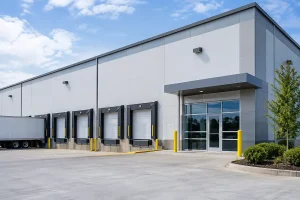
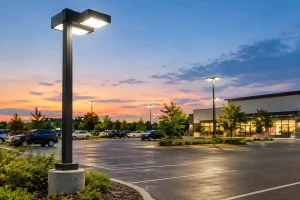
Some ballpark improvements involve more than a fence banner. A project may include new field signage, building graphics, directional signs, parking lot lighting, scorekeeper-area power, or illuminated identification at an entrance. Coordinating separate vendors for each component can create gaps in scheduling and responsibility.
Working with an experienced sign and electrical contractor keeps the project moving as one coordinated effort. The team can evaluate the site, develop graphics that fit the facility, address structural mounting needs, and identify electrical or permit considerations where applicable. That is especially helpful when a property manager is improving a larger athletic complex or preparing a venue for tournament traffic.
Rudnick Enterprises approaches signage as a field-ready construction project, not just a printed product. That means considering how graphics will be fabricated, where they will mount, what conditions they will face, and what it takes to keep the finished site looking professional after installation.
A Practical Pre-Production Checklist
Before approving a dugout banner project, confirm the purpose of each panel, the exact fence or wall dimensions, and the intended viewing distance. Provide the best available logo files rather than screenshots or web images. Low-resolution artwork may look acceptable in a small preview but can appear soft or pixelated once enlarged.
Also consider the season calendar. If banners are needed before opening day, allow time for consultation, design approval, fabrication, and installation. Schools and leagues often have multiple stakeholders involved in branding and sponsor approvals, so a clear approval process helps avoid production delays.
Finally, think about what happens after the season. Some banners should be removed, cleaned, and stored for reuse. Others may remain in place but need a periodic check for loose fasteners, damaged edges, or changing sponsor information. Building that maintenance plan into the project is a simple way to protect the investment.
A dugout banner should feel like it belongs at the ballpark from the first pitch, not like a temporary afterthought. Start with the actual site, choose materials for local conditions, and give the artwork enough room to be seen. Those decisions create a display that supports the team, respects the sponsor, and stays looking right when the stands are full.