




A pylon sign has one job before a customer ever reaches your door: make your business easy to find. For a restaurant near a busy interchange, a retail center with several tenants, or a medical office set back from the road, that visibility can directly affect traffic. Choosing the right pylon sign contractor Kentucky businesses can rely on is about more than ordering a tall sign. It means planning a structure that fits your property, brand, electrical needs, local regulations, and long-term maintenance expectations.
Pylon signs are substantial investments. They involve foundations, structural engineering, electrical connections, permits, fabrication, installation equipment, and often coordination with landlords, developers, or utility providers. When those pieces are handled by separate vendors, a straightforward visibility project can turn into a series of delays. A full-service contractor helps keep the work organized from the first site visit through installation and future service.
What Makes a Pylon Sign Different?
A pylon sign is a freestanding sign supported by one or more poles or a concealed structural cabinet. It is designed to be seen from a distance, usually along roadways, at property entrances, or near parking areas. Many businesses use them to display a single brand, while shopping centers and office complexes use multi-tenant pylon signs to identify several businesses in one location.
The right sign height, display area, and illumination depend on the site. A sign that works well along a high-speed corridor may be oversized for a neighborhood retail property. Conversely, a low monument sign may look polished but fail to provide enough visibility where drivers need advance notice to turn safely.
A pylon sign can include cabinet faces, channel letters, internally illuminated panels, changeable copy, digital message centers, tenant panels, or directional information. Those choices affect the budget, but they also affect the sign’s usefulness. The best design is not automatically the largest or brightest option. It is the one that is readable, durable, permitted, and appropriate for the property.
Start With the Site, Not Just the Sign Design
An experienced pylon sign contractor in Kentucky begins by looking at the physical location. Road speed, viewing distance, landscaping, setbacks, underground utilities, access for installation equipment, and the sign’s relationship to the building all matter. A rendering may look great on paper, but the field conditions determine whether it can be installed correctly.
For example, a property owner may want a sign near the entrance drive. That location may be ideal for visibility, but it could also conflict with an easement, a utility line, a drainage area, or required sight clearance. Moving the sign a few feet can change the engineering approach, the foundation size, the permit path, and the cost.
This is also where a contractor’s electrical experience matters. Illuminated cabinets, channel letters, and digital displays need properly planned power. Depending on the site, the project may require a new circuit, trenching, conduit, disconnects, timers, photocells, or electrical panel upgrades. Treating electrical work as an afterthought can create avoidable change orders later.
Permits and Engineering Are Part of the Job
Commercial sign rules vary by city, county, development, and zoning district. Louisville Metro and communities throughout Kentucky and Southern Indiana may regulate sign height, square footage, illumination, electronic message timing, setbacks, and the number of signs allowed on a property. A planned development or commercial lease can add another layer of approval.
That is why permitting should be addressed early. Before fabrication begins, a contractor should confirm the local requirements and prepare the documents needed for review. Depending on the sign and jurisdiction, that can include site plans, sign drawings, electrical information, footing details, and sealed structural engineering.
Engineering is especially important for pylon signs because the structure must withstand wind loads and support the finished sign safely. The foundation is not a generic concrete block. Its design depends on the sign’s dimensions, weight, pole configuration, soil conditions, and local code requirements. Cutting corners below grade may not be visible on opening day, but it can become a serious problem over time.
A contractor who manages permitting, engineering coordination, fabrication, and installation gives the customer a clearer line of responsibility. If a reviewer requests a change, there is one team working to resolve it instead of several vendors pointing to each other.
Design for Readability and Daily Use
Business owners understandably focus on colors, logos, and how the sign represents the brand. Those are essential considerations, but roadside signage also needs to work at a glance. A customer moving through traffic has only a few seconds to recognize a name, understand the message, and identify where to turn.
Simple layouts generally read better from a distance. High-contrast colors, appropriately sized copy, and a clear hierarchy make more of an impact than trying to fit every service, phone number, or promotion onto the face. For multi-tenant signs, consistent tenant panels help the entire property look organized while allowing individual businesses to remain visible.
Illumination deserves the same practical attention. Internal LED lighting can provide even nighttime visibility while using less energy than older lighting systems. Digital displays can be useful for time-sensitive promotions, fuel pricing, event notices, or tenant messaging, but they require consideration of local rules, brightness settings, service access, and content management. They are a strong fit for some properties, not every property.
Materials should match the environment and expected service life. Quality cabinets, faces, finishes, fasteners, and electrical components help a sign stand up to weather and continue representing the property professionally. A lower initial price can be attractive, but it is worth asking what is included and what may need replacement sooner.
What the Installation Process Should Look Like
A well-managed pylon sign project follows a logical sequence. The contractor consults with the owner or property manager, reviews the site, develops the design, coordinates engineering and permits, fabricates the sign, prepares the foundation and electrical work, and schedules final installation. The exact order can shift based on jurisdictional approvals and site conditions, but the customer should always know what happens next.
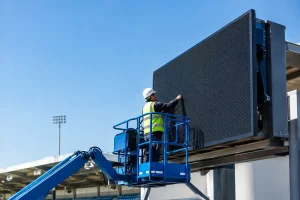
Installation itself often requires specialized equipment, including cranes, augers, bucket trucks, and traffic or parking-area coordination. On an active commercial site, safety and access planning are not optional. The contractor needs to protect customers, employees, vehicles, and nearby structures while completing the work efficiently.
After the sign is installed, the electrical system should be tested and the finished work inspected for alignment, illumination, secure mounting, and clean presentation. For a new business opening or a tenant turnover, timing matters. Clear communication helps prevent the sign from becoming the last unfinished item on an otherwise ready property.
Rudnick Enterprises brings signage, electrical, lighting, and contracting capabilities together so customers do not have to coordinate separate teams for the connected parts of the project. That one-team approach is particularly helpful when a pylon sign requires both structural planning and electrical upgrades at the site.
Plan for Service Before Something Fails
A pylon sign is exposed to weather, changing temperatures, electrical wear, and occasional impact damage. Even a well-built sign will eventually need attention. LED modules can fail, faces can crack, tenant panels can change, storms can damage cabinets, and electrical connections may need troubleshooting.
Service access should be considered during design. A sign that is difficult to open, reach, or repair may cost more to maintain. Property managers should also keep records of permits, drawings, electrical details, and past repairs. That information makes future tenant changes and service calls much easier to handle.
For multi-tenant properties, a maintenance plan helps preserve the value of the entire sign structure. A burned-out panel or outdated tenant name can make a shopping center look neglected, even when the individual businesses are operating well. Prompt repairs protect curb appeal and make the property easier to navigate.
Questions to Ask Before You Hire
Before selecting a contractor, ask who will handle design, code review, permits, structural engineering, electrical work, fabrication, installation, and future repairs. Ask whether the price includes foundations, electrical connections, permit fees, crane work, and site restoration, or whether those items are separate. Clear answers help you compare proposals fairly.
It is also reasonable to ask about licensing, insurance, prior work on similar sites, expected lead times, and how changes are managed after approval. The lowest number on a proposal is not always the lowest project cost if key work is excluded or coordination is left to the owner.
A pylon sign should make arriving at your property easier, day and night. With careful site planning and a contractor prepared to own the details, it can keep working for your business long after installation day.