


A dark letter, flickering cabinet, or partially lit pylon sign can change how customers see your business before they ever walk through the door. Illuminated sign repair is not just about restoring light. It protects visibility, supports a professional property appearance, and helps address electrical or structural concerns before they become larger problems.
For businesses across Louisville and Southern Indiana, a sign often works long after regular business hours. When it is not performing as it should, the cause may be simple, such as a failed internal light source, or more involved, such as damaged wiring, water intrusion, a failing power supply, or a control issue. A qualified sign and electrical contractor can identify the actual cause and recommend a repair that makes sense for the sign, the property, and the budget.
What a Failing Illuminated Sign Is Telling You
Not every sign issue looks the same. Some failures are obvious: the sign is completely dark, a section has gone out, or the lighting flashes intermittently. Others are more gradual, including uneven brightness, dim graphics, discoloration, or a sign that works only at certain times.
These symptoms matter because they can point to different repairs. A single dark letter may have an internal lighting component or connection issue. A sign cabinet that is dim across its entire face may have a power supply problem, aging lighting components, or worn sign faces that are blocking light output. If a sign cycles on and off, the issue could involve the photocell, timer, electrical circuit, or a component that is overheating.
Water is a common concern, particularly after storms or years of exposure to changing Kentucky and Indiana weather. Moisture can enter through cracked seams, failed gaskets, damaged faces, loose access panels, or penetrations around mounting hardware. Once inside, it can affect wiring, electrical components, and metal surfaces. Prompt attention can often limit the scope of the repair.
Common Illuminated Sign Repair Services
A proper service call starts with troubleshooting rather than guessing. The goal is to find the failure point and correct it safely, not simply replace a visible part and hope the issue stays resolved.
Lighting and power component replacement
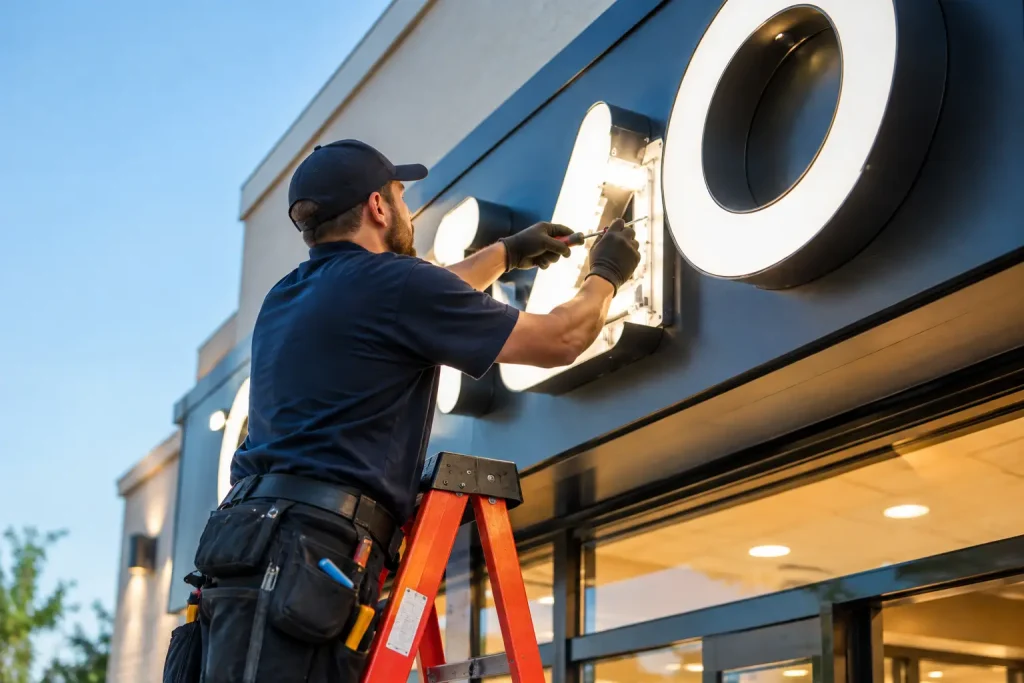
Many service calls involve replacing failed internal lighting components, power supplies, sockets, wiring, or controls. Modernizing older internal lighting can also improve brightness and reduce future maintenance needs. The right approach depends on the sign’s construction, age, access requirements, and condition of the electrical system serving it.
For example, replacing one failed component may be the practical choice for a newer sign with an isolated issue. On an older sign with repeated outages and uneven illumination, a broader lighting retrofit may provide better value. The upfront cost is higher, but it can reduce recurring service calls and help the sign present a more consistent appearance.
Cabinet, channel letter, and sign face repairs
Lighting is only one part of an illuminated sign. Cracked or faded faces, loose trim, damaged returns, corroded fasteners, missing letter components, and worn mounting hardware can all affect performance and appearance. A repair may require restoring the enclosure, resealing openings, replacing damaged faces, or securing the sign structure before electrical work is completed.
This is especially important with channel letters and cabinet signs. If the enclosure is compromised, new electrical components may be exposed to the same moisture or debris that caused the original failure. Repairing the visible symptom without correcting the enclosure can lead to another outage sooner than expected.
Electrical troubleshooting and circuit repairs
Sometimes the sign itself is in good condition, but the issue originates in the electrical feed, disconnect, breaker, timer, photocell, or related equipment. A sign contractor with electrical capability can trace the problem beyond the sign housing and coordinate the necessary repair without leaving the customer to manage multiple vendors.
That one-team approach is valuable when an issue involves both signage and building electrical work. It helps keep diagnosis clear, prevents duplicated effort, and gives the property owner one point of accountability from assessment through repair.
When Repair Makes Sense and When Replacement Is Better
Repair is often the right choice when the sign’s structure is sound, its branding is current, and the problem is limited to serviceable components. A targeted repair can restore operation quickly and extend the useful life of an existing investment.
Replacement deserves consideration when a sign has widespread corrosion, recurring electrical failures, major face damage, obsolete components, or a design that no longer represents the business. The same is true when code requirements, access limitations, or structural conditions make repeated repairs less practical.
A good contractor should explain both paths plainly. There is no value in pushing a full replacement for a repairable sign, and there is no value in repeatedly repairing a sign that is near the end of its service life. The best decision depends on the sign’s condition, brand needs, property plans, and the cost of continued maintenance over time.
For a shopping center or multi-tenant property, consistency also matters. A dim or damaged tenant sign can affect the appearance of the entire façade. Property managers may decide to repair the immediate issue while developing a longer-term plan for tenant criteria, lighting upgrades, or monument sign improvements.
Safety, Access, and Code Details Matter
Sign repair can involve elevated work, energized electrical systems, heavy components, and exterior structures exposed to wind and weather. It is not a job for improvised repairs from a ladder or for covering a problem with a temporary patch.
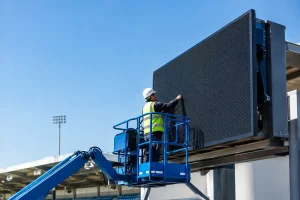
Licensed and insured professionals can assess the condition of the sign, use the appropriate access equipment, and perform electrical work with safety in mind. They can also identify concerns that are easy to miss from the ground, such as loose mounting points, deteriorating raceways, damaged conductors, or water pooling inside a cabinet.
Permitting needs vary based on the scope of work and the local jurisdiction. A straightforward component replacement may not require the same process as structural changes, a new electrical feed, or a sign replacement. Businesses in Louisville, Jeffersonville, Clarksville, New Albany, Sellersburg, and surrounding communities benefit from working with a team that understands how sign work, electrical requirements, and local approvals can overlap.
How to Reduce Future Sign Outages
Signs need periodic attention, even when they appear to be working. A practical maintenance plan can catch small issues before they turn into a dark storefront, an emergency service call, or more extensive damage.
Property owners and managers should periodically look for uneven lighting, water staining, cracks in faces or trim, exposed wires, loose panels, and signs that no longer turn on or off consistently. After severe weather, it is wise to inspect visible sign components from the ground and report any changes promptly.
It also helps to keep a record of prior service. If the same area keeps failing, that pattern can reveal an underlying moisture, wiring, or power issue. Sharing that history with the service team helps them investigate efficiently instead of treating every outage as an unrelated event.
A Clear Process for Sign Service
The best illuminated sign repair work begins with a clear conversation about what has changed, when the issue began, and whether the sign has had previous problems. From there, the technician can inspect the sign, test the relevant electrical components, assess the enclosure and mounting condition, and explain the recommended repair.
If parts need to be ordered or access equipment is required, the service plan should set realistic expectations. For more involved repairs, the contractor may coordinate electrical work, fabrication, permitting, and installation so the customer does not have to chase separate providers. Rudnick Enterprises approaches this work as a complete service responsibility, with the goal of making the process simple and getting the job done right.
A properly lit sign does more than brighten a building. It tells arriving customers that the business is open, attentive, and ready to serve. Addressing a flicker, dark section, or damaged cabinet early keeps a manageable repair from becoming a larger disruption to your property and your brand.