



A scoreboard has to perform when the crowd is watching. Whether it serves a school stadium, municipal park, training facility, or event venue, a professional LED scoreboard installation involves far more than mounting a display and turning it on. The equipment needs the right location, structural support, electrical capacity, data connection, visibility, and permit coordination to deliver clear information season after season.
For facility owners and managers in Louisville and Southern Indiana, the best approach is to plan the scoreboard as part of the property, not as a stand-alone purchase. That prevents expensive adjustments later and gives athletes, staff, sponsors, and spectators a display they can rely on.
What a Successful LED Scoreboard Installation Requires
An LED scoreboard is a visual communication system with electrical and construction requirements behind it. It may display scores, game clocks, player information, sponsor messages, announcements, video, or emergency notices. Each feature affects the scope of work.
The first question is not simply, “What size scoreboard do we want?” It is, “What does this facility need the display to do, and what can this location safely support?” A youth baseball field may need a straightforward scoring display that is easy for volunteers to operate. A high school football stadium may need a larger board, branded graphics, sponsor panels, and a display that remains readable from long distances. A gymnasium has different concerns, including wall structure, ceiling height, viewing angles, and glare from interior lighting.
A qualified contractor helps turn those needs into a practical installation plan. That includes reviewing the proposed mounting area, existing electrical service, site access, and local code requirements before work begins.
Location, Height, and Viewing Distance
Placement determines whether spectators can actually use the scoreboard. A board mounted too low may be blocked by players, fencing, bleachers, or spectators. One installed too high can become difficult to read from nearby seating. The right height depends on the venue, screen size, field layout, and sightlines from the areas that matter most.
Sun exposure also deserves attention. Outdoor LED displays are designed for bright conditions, but direct afternoon sun can still affect the way content appears to spectators. The board should face the right direction where possible, while avoiding obstructions and leaving enough clearance for service access.
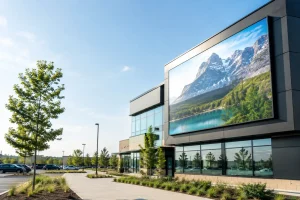
Indoor installations require a separate review. Reflections from windows and lights, gym acoustics, basketball backstops, and the building’s structural framing can all influence placement. There is no one-size-fits-all mounting location, which is why an on-site review is valuable.
Structural Support Is Not an Afterthought
A scoreboard can be heavy, and outdoor units must withstand wind, weather, and seasonal temperature changes. Pole-mounted displays may require engineered foundations, properly sized poles, and secure attachment details. Wall-mounted scoreboards need confirmation that the wall structure can support the equipment and its mounting system.
Existing structures are not automatically suitable just because they are convenient. A light pole, building wall, or older support frame may need evaluation before it carries a new electronic display. Skipping this step can create safety concerns, delays, or a costly redesign after the equipment arrives.
For larger projects, engineering documentation may be required for permits or property records. A contractor experienced in signage, electrical, and general construction can coordinate the structural details with the installation rather than leaving the customer to manage multiple vendors.
Electrical Planning for LED Scoreboard Installation
The scoreboard must have dependable power from a properly installed, code-compliant circuit. That sounds simple, but electrical scope often becomes the deciding factor in the project schedule and budget.
An electrician should determine the display’s voltage, amperage, disconnect requirements, circuit protection, grounding, and distance from the electrical source. If the existing panel is near capacity, an electrical upgrade or new feeder may be needed. For outdoor installations, conduit routing, underground trenching, weather-rated connections, and protection from physical damage are part of doing the job right.
The control system needs planning too. Some scoreboards use wired controls, while others use wireless operation or network-based software. A wireless controller may be convenient, but signal reliability can vary depending on distance, building materials, nearby equipment, and the layout of the facility. In some settings, a hardwired connection is the more dependable choice.
Backup power is another decision worth discussing. Not every scoreboard needs it, but venues that host tournaments, public events, or revenue-generating games may benefit from planning for outages. The answer depends on how the facility operates and what interruption would mean during an event.
Permits, Codes, and Property Requirements
A scoreboard can be subject to building, electrical, zoning, and sign regulations, particularly when it includes digital messaging, sponsor content, or prominent exterior placement. Requirements vary by jurisdiction and by property type. Schools, public facilities, commercial properties, and leased sites may also have internal approval processes that affect the schedule.
Permit coordination should begin early, not after fabrication is complete. A local review may address setback, height, structural plans, electrical work, brightness, message timing, or visibility from a public roadway. If the project includes new poles, foundations, excavation, or a large display, additional review may apply.
Property managers and developers should also consider lease responsibilities and future service access. A scoreboard located where a lift cannot reach it easily may cost more to maintain. A display installed near planned renovations, landscaping, or expansion areas can create avoidable conflicts later.
Rudnick Enterprises helps customers manage the moving parts that often slow projects down, including site review, electrical planning, permitting coordination, installation, and ongoing service. With one accountable team, customers spend less time trying to sort out where the sign work ends and the electrical work begins.
Choosing Features That Fit the Facility
The right scoreboard is not always the largest one. The most effective option is the one that fits the venue’s use, budget, and operating staff.
Start with the information people need to see. For a basic athletic field, that may include score, time, inning or period, and team fouls. A more advanced facility may want player statistics, animated graphics, sponsor recognition, event schedules, or video content. Those additions can create more value, but they also affect display size, controller needs, electrical demand, and operator training.
Brightness and pixel pitch matter as well. A display viewed from greater distances can often use a wider pixel pitch, while a closer audience may need finer detail for text and graphics. For an outdoor venue, brightness must be appropriate for daylight viewing without creating an unnecessary impact on nearby properties. For an indoor venue, a display that is too bright can be distracting.
The operating experience matters just as much as the screen. Ask who will run the scoreboard on game day and how often staff or volunteers change. A system should be manageable for the people who will actually use it. Training, clear controls, and documented procedures help prevent errors when the game clock is running.
Installation Day and Long-Term Service
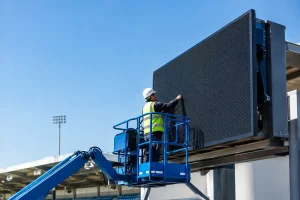
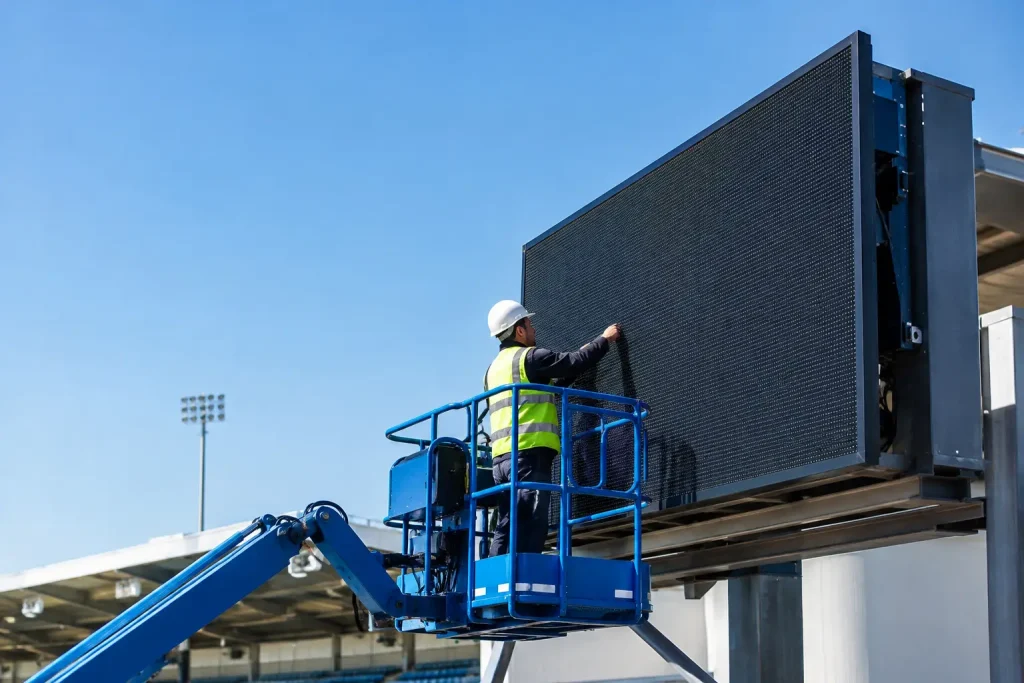
Once the design, approvals, fabrication, and site preparation are complete, installation day should follow a coordinated plan. Crews may need lifts, cranes, traffic control, field protection, scheduled power shutdowns, or access to areas that normally remain active. Good project management keeps those details organized and reduces disruption to tenants, students, employees, and visitors.
After the unit is mounted and connected, the work is not finished. The scoreboard should be tested for power, display quality, controller response, timing functions, and any programmed content. The team should also confirm that weather seals, wiring, mounting hardware, and access points are properly finished.
Like any electrical display, a scoreboard benefits from regular inspection. Loose connections, water intrusion, storm damage, controller issues, and changing electrical conditions can affect performance over time. Establishing a maintenance plan helps identify small concerns before they interfere with a game or event.
Questions to Settle Before You Buy
Before selecting a scoreboard, facility decision-makers should have clear answers about the intended use, viewing distance, installation location, electrical source, operating method, permit timeline, and responsibility for future maintenance. It is also wise to ask whether the design leaves room for sponsor panels, expansion, or changing technology later.
Budget should account for the complete project, not just the display itself. Site work, foundations, poles, electrical installation, permitting, controls, lift equipment, and labor can all be necessary parts of the final scope. A detailed proposal makes those expectations clearer from the beginning.
A properly planned scoreboard becomes part of how a facility serves its community. When the structure, electrical work, display, and controls are handled with care, the result is easier to operate, safer to maintain, and ready for the moments that bring people together.