



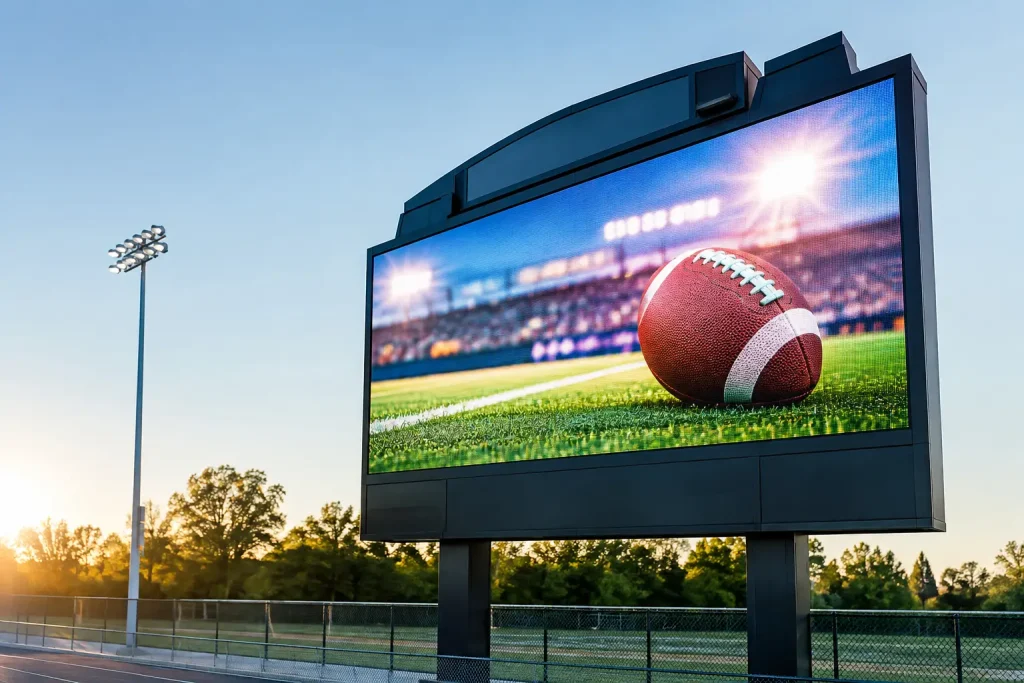
A scoreboard is more than a way to display the score. For a school, park, athletic complex, community center, or event venue, it becomes part of the experience people remember from the stands. It needs to be easy to read in changing light, built for repeated use, safely connected to power, and positioned so players, officials, spectators, and sponsors can all see it.
That creates a bigger project than choosing a display from a catalog. The right solution has to account for the sport, viewing distance, site conditions, electrical requirements, local permitting, structural support, and the people who will operate it. Planning those details early helps prevent expensive changes after fabrication or installation is already underway.
What a Commercial Scoreboard Needs to Do
The first question is not, “What size scoreboard do we want?” It is, “What does this facility need the scoreboard to accomplish?” A youth baseball field, a high school football stadium, and an indoor recreation center have very different requirements.
At a minimum, the display must communicate the information people expect without hesitation. Depending on the sport, that may include score, time, period, inning, player numbers, fouls, possession, pitch count, or timeout information. A simple layout can be the best choice when the viewing area is close and the game format is straightforward. Larger facilities may need more data, brighter digital components, or separate displays for player information and sponsorship messages.
Readability should guide every decision. Digits that look large from the field can become difficult to read from upper seating, across a parking lot, or from a distant sideline. Viewing angles matter as much as size. So do sunlight, overhead lighting, glare, and the contrast between the display face and its surroundings.
A well-planned scoreboard also supports the facility beyond game day. Sponsor panels can create a revenue opportunity. A digital message area may help communicate schedules, community announcements, weather delays, or upcoming events. Those additions are useful when they serve a clear purpose, but they should not make the display cluttered or hard to operate.
Start With the Site, Not the Product
A scoreboard is only as reliable as the site preparation behind it. Before finalizing a design, an experienced sign and electrical contractor should evaluate where the equipment will sit, how it will be supported, and how power will reach it.
Outdoor installations need a clear review of wind exposure, soil conditions, drainage, nearby utilities, and access for installation equipment. The support structure must be engineered for the display size, weight, and local environmental conditions. A scoreboard mounted to a building or integrated into an existing structure requires the same careful attention to attachment points and load capacity.
Electrical planning is equally important. The unit may require a dedicated circuit, disconnecting means, properly sized conductors, grounding, surge protection, and weather-rated connections. If the site has limited electrical capacity, the work may involve panel upgrades, trenching, conduit runs, or coordination with other facility improvements.
This is where one coordinated team can make a real difference. Rather than leaving the owner to manage a sign supplier, electrician, engineer, and installer separately, the project can be organized around the full scope. Rudnick Enterprises can help coordinate the visual display, structural considerations, electrical infrastructure, permitting, and installation so the work moves forward with fewer handoffs and fewer surprises.
Indoor and outdoor projects have different priorities
Indoor scoreboards are generally protected from weather, but they still require thoughtful placement, power routing, control access, and visibility under gymnasium lighting. Ceiling height, wall construction, bleacher layout, and fire or building requirements can affect the installation approach.
Outdoor scoreboards face a more demanding environment. Rain, heat, cold, wind, lightning exposure, and seasonal temperature changes all influence material selection and service needs. Components need to be suited to the environment, enclosures must protect internal equipment, and the display should be installed where routine service can be performed safely.
Choose Features That Match How You Operate
More features are not automatically better. A complex system can be valuable for a busy multi-sport venue with trained staff, but it may create frustration at a smaller facility where volunteers run the controls. The best scoreboard is one that staff can operate confidently when the game is moving quickly.
Control options deserve a close look. Wired controls can be dependable and straightforward, while wireless systems may offer more flexibility in the press box or scorer’s table. The right choice depends on the facility layout, interference concerns, range requirements, and how the equipment will be stored and protected between events.
Consider who will use the system most often. Ask whether the controls have clear labeling, whether the display can be programmed for different sports, and whether a backup operating method is available. Training at turnover is not a minor detail. A well-installed scoreboard is more useful when the people responsible for game operations know how to use it without guesswork.
Digital display areas introduce another decision point. They can provide useful messaging and sponsor visibility, but they need an appropriate brightness level, a manageable content process, and a realistic maintenance plan. If no one on staff has time to update messaging, a simpler fixed-panel arrangement may be a better long-term fit.
Permitting, Codes, and Engineering Should Be Handled Early
A prominent scoreboard can trigger permitting requirements that vary by jurisdiction. Depending on the site and display configuration, the project may involve sign permits, building permits, electrical permits, zoning review, structural drawings, or landlord and property-owner approvals.
Waiting until the equipment is ordered to ask about these requirements can create delays. Height limits, setbacks, illumination rules, and visibility from public roads may influence what is allowed. For schools, municipal fields, and shared recreation properties, there may also be internal approval processes or bid requirements to consider.
Code compliance is not paperwork for paperwork’s sake. It helps protect people and property. Proper structural engineering, electrical installation, grounding, and clearances reduce the risk of failures that could interrupt events or create safety concerns.
A contractor familiar with commercial signage and electrical work can identify the likely permitting path before the project reaches the installation stage. That early coordination gives owners a more realistic schedule and helps keep design choices aligned with local requirements.
Plan for Service Before the First Game
A scoreboard should be viewed as equipment that will need attention over time. Even high-quality systems can need inspection, cleaning, electrical troubleshooting, controller replacement, display repairs, or storm-related service. Access is a major part of that conversation.
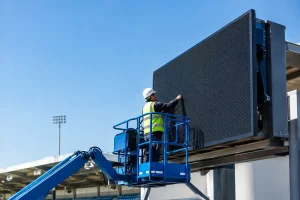
If the display is placed where a lift cannot safely reach it, routine service becomes more complicated and potentially more expensive. If control equipment is stored in an unsecured or damp location, its useful life may be shortened. If circuits are not clearly labeled, a simple troubleshooting call can take longer than necessary.
A practical maintenance approach includes periodic inspections of mounting hardware, electrical connections, weather seals, display performance, and control equipment. Facilities should also keep basic operating instructions available for staff and document who to call if a problem occurs before an event.
For older scoreboards, repair versus replacement depends on the condition of the structure, availability of compatible components, reliability of the controls, and the facility’s future plans. Replacing a failed component can make good sense when the system is otherwise sound. When problems are recurring or the display no longer meets the venue’s needs, a planned replacement may be the more cost-effective decision.
Make the Scoreboard Part of the Whole Property
The most successful scoreboard projects fit the rest of the site. They complement school colors, team branding, entrance signage, directional signs, and facility lighting instead of looking like an afterthought. That does not mean every element must match exactly. It means the display should look intentional and belong in the environment.
For commercial recreation facilities and sports complexes, this can extend to wayfinding from the parking area to the field or gym. Visitors should be able to find the right entrance, restrooms, concessions, seating areas, and accessible routes without confusion. A clear sign plan improves the guest experience before anyone sees the first score.
There are trade-offs in every project. A larger display may improve visibility but require more structural and electrical work. Additional sponsor space can add value but may affect the overall design. Digital features offer flexibility but require a realistic plan for operation and service. A good contractor will explain those choices plainly and help you invest where it matters most.
A scoreboard should be ready when the crowd arrives, not become another game-day concern. With the right design, power, permitting, installation, and ongoing support, it can serve your facility reliably for seasons to come.